Telescope Focal Length: Why It Matters for Your Observing Experience
When I first started exploring the night sky with my telescope, I was amazed at how much detail I could see, and soon, I realized there’s a lot more to stargazing than just pointing a telescope at the stars. One of the first concepts I came across was the focal length of a telescope. Understanding telescope focal length is crucial for anyone serious about astronomy because it plays a significant role in determining the quality of the image you’ll see and how much of the sky you can view. In this article, I will dive deep into what telescope focal length is, how it affects your observations, and why it’s important to choose the right one for your needs.
What Is Telescope Focal Length?
Telescope focal length is a measurement that indicates the distance between the lens (or mirror) of the telescope and the point where the light it gathers comes to a focus. To put it simply, the focal length determines how long the light path is inside your telescope before it’s brought into focus at the eyepiece. The longer the focal length, the greater the magnification potential of the telescope. However, there’s a balancing act between magnification and the field of view—something that every astronomer must consider when choosing a telescope.
For example, a telescope with a focal length of 1000mm will bring objects into greater magnification compared to one with a focal length of 500mm, but the higher magnification comes with a narrower field of view. A longer focal length gives you more zoom power, making it easier to observe distant objects like planets or stars in more detail. However, it also makes the field of view smaller, so you might not be able to observe as much of the sky at once.
How Does Telescope Focal Length Affect Magnification?

The relationship between magnification and telescope focal length is something I quickly learned when starting out. Magnification is calculated by dividing the focal length of the telescope by the focal length of the eyepiece you’re using. Here’s the formula:
Magnification = Telescope Focal Length / Eyepiece Focal Length
For example, if you have a telescope with a focal length of 1200mm and you use an eyepiece with a focal length of 12mm, the magnification will be:
Magnification = 1200mm / 12mm = 100x
This means the object you’re viewing will appear 100 times larger than it would to the naked eye. As you can see, longer focal lengths can provide higher magnification. However, the magnification is only part of the picture. With higher magnification, the brightness of the image can decrease, making it harder to see faint objects clearly, especially when you’re observing deep-sky objects. So, while higher magnification is beneficial for observing the Moon or planets in detail, it may not be ideal for galaxies or nebulae, where a broader view is needed.
The Effect of Focal Length on the Field of View
Besides magnification, field of view is another important factor to consider when it comes to telescope focal length. The field of view refers to how much of the sky you can see through your telescope at any given time. If you want to observe wide-ranging objects like the Andromeda Galaxy or the Milky Way, a wider field of view is essential.
A telescope with a shorter focal length offers a wider field of view because it gathers light faster, allowing you to see more of the sky at once. For instance, if you’re looking to explore star clusters or view large nebulae, a shorter focal length is more practical. On the other hand, if you’re focusing on smaller objects or want to zoom in on planets like Jupiter or Saturn, a longer focal length will give you the magnification needed to see more detail, but it will limit the amount of sky you can view.
How Focal Length Influences Telescope Types
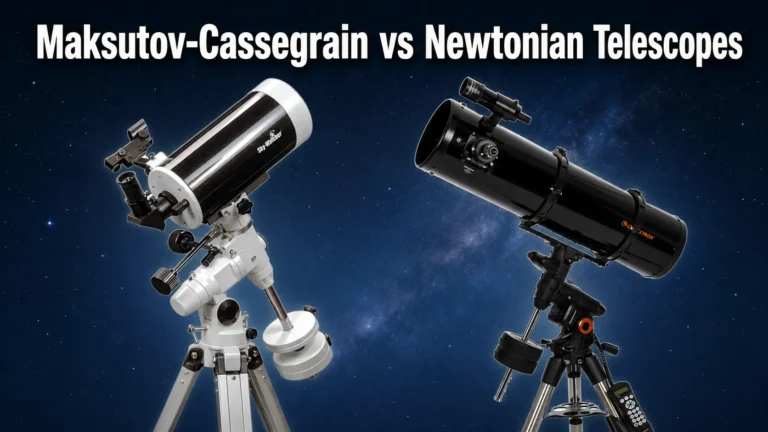
There are several types of telescopes, and each type uses focal length in a slightly different way to impact your observing experience. The three most common types are refractor, reflector, and catadioptric telescopes. Each of these has unique characteristics when it comes to focal length.
Refractor Telescopes

Refractor telescopes use lenses to gather and focus light. These telescopes often have longer focal lengths, which results in greater magnification. If you have a telescope with a focal length of 1200mm, you can expect it to provide a higher magnification compared to a reflector of the same size. Refractors, however, tend to have a narrower field of view due to their longer focal lengths. They are great for planetary observation but may not be ideal for wide-field views of deep-sky objects.
Reflector Telescopes

Reflector telescopes use mirrors instead of lenses to gather and focus light. These telescopes usually have shorter focal lengths compared to refractors, which results in a wider field of view. This makes reflectors ideal for viewing large-scale objects like galaxies and nebulae. Reflectors are typically more affordable and lightweight compared to refractors, but their shorter focal length can sometimes lead to less magnification, depending on the eyepiece you use.
Catadioptric Telescopes

Catadioptric telescopes combine lenses and mirrors to offer a versatile design. These telescopes typically have focal lengths that are a bit longer, providing high magnification with a reasonably wide field of view. They are known for their excellent image quality and are often favored for their ability to provide clear, sharp views of planets, stars, and deep-sky objects alike. If you want a versatile telescope with a good balance of magnification and field of view, a catadioptric design might be your best choice.
Choosing a Telescope Based on Focal Length
When it comes to choosing the right telescope, understanding how focal length affects both magnification and field of view is essential. The focal length you choose should align with the type of observing you plan to do.
If your primary interest lies in observing planets and the Moon, you’ll want a telescope with a longer focal length to achieve greater magnification. However, if you’re keen on observing deep-sky objects like galaxies, nebulae, and star clusters, you’ll want a telescope with a shorter focal length for a wider field of view.
Additionally, you should also consider other factors such as the aperture size of the telescope (which influences how much light the telescope gathers) and portability. The right focal length should complement these features to ensure you get the best possible stargazing experience.
Conclusion
In conclusion, the telescope focal length is a key factor in shaping your experience as an amateur astronomer. By understanding how it affects magnification and field of view, you can select a telescope that matches your specific needs and interests. Whether you want to zoom in on distant planets or explore wide expanses of the night sky, the right focal length will make a significant difference in the quality of your observations.
As you get more familiar with telescopes, I encourage you to experiment with different focal lengths and eyepiece combinations. This hands-on approach will help you gain a deeper understanding of how focal length influences your viewing experience, enabling you to make the most of your stargazing sessions. Keep exploring the cosmos—there’s always more to discover!