As someone who has spent countless nights beneath the stars, I’ve had the opportunity to experiment with a wide range of telescopes. Each type has its merits, but none have intrigued me quite like the reflecting telescope. With its mirror-based design and ability to reveal the deep mysteries of the universe, it’s a tool that holds a special place in my heart. Still, no telescope is without its flaws. In this article, I’ll share my firsthand experience exploring the pros and cons of reflecting telescopes, helping you decide whether this classic stargazing instrument is the right match for your astronomical journey.
Discovering the Reflector: What Makes It Unique?
Reflecting telescopes operate by using mirrors rather than lenses to collect and direct light. The main mirror, typically curved, gathers light from distant objects and reflects it to a focal point where it forms an image. This design differs significantly from refracting telescopes, which rely on glass lenses to achieve the same goal.
When I purchased my first reflecting telescope, a basic 6-inch Newtonian, I was amazed at how much detail it brought into view. Suddenly, the moon’s craters looked more textured, and faint galaxies began to reveal themselves in the darkness. That moment marked a turning point in my relationship with astronomy, setting me on a path of deeper exploration.
The Bright Side: Advantages of Reflecting Telescopes
Excellent Light Collection at a Lower Cost
One of the biggest surprises for me was how much more telescope I could get for my money with a reflector. Because mirrors are easier and cheaper to manufacture than high-precision lenses, reflecting telescopes usually offer larger apertures for less financial investment. I was able to observe more stars, nebulae, and galaxies simply because my telescope could gather more light, making even dim objects appear with greater clarity.
Free From Chromatic Distortion
Another impressive benefit I discovered early on was the absence of chromatic aberration. This issue, common in refractors, causes colored halos to appear around bright objects due to the way lenses bend different wavelengths of light. Reflectors, relying on mirrors, don’t suffer from this problem. The stars I observed were sharper, and the planets appeared more defined, without the unwanted color fringes that had annoyed me with my previous scope.
Reflecting telescopes really shine when it comes to viewing deep sky phenomena. Their ability to gather substantial light makes them perfect for observing galaxies, globular clusters, and nebulae. During one especially dark night in the countryside, I pointed my scope at the Andromeda Galaxy. It was faint, but seeing its spiral arms for the first time through my own telescope was nothing short of breathtaking. That kind of viewing is where reflectors truly excel.
The Drawbacks: Downsides to Consider
While I’ve certainly enjoyed the strengths of these telescopes, understanding the pros and cons of reflecting telescopes wouldn’t be complete without acknowledging the areas where they fall short. Like any tool, they come with trade-offs that are important to weigh before making a decision.
The Struggle with Collimation
The biggest hurdle for me when I first started using a reflector was learning how to collimate it. Collimation refers to the alignment of the telescope’s mirrors, which is crucial for achieving sharp and accurate images. The process isn’t overly complicated, but for beginners, it can be daunting. My early attempts were frustrating, I often ended up with blurry views simply because my mirrors were slightly off. Over time, with the help of tutorials and tools like a laser collimator, I got the hang of it. But it’s definitely a maintenance step that refractor users don’t have to deal with.
Heft and Size Can Be a Barrier
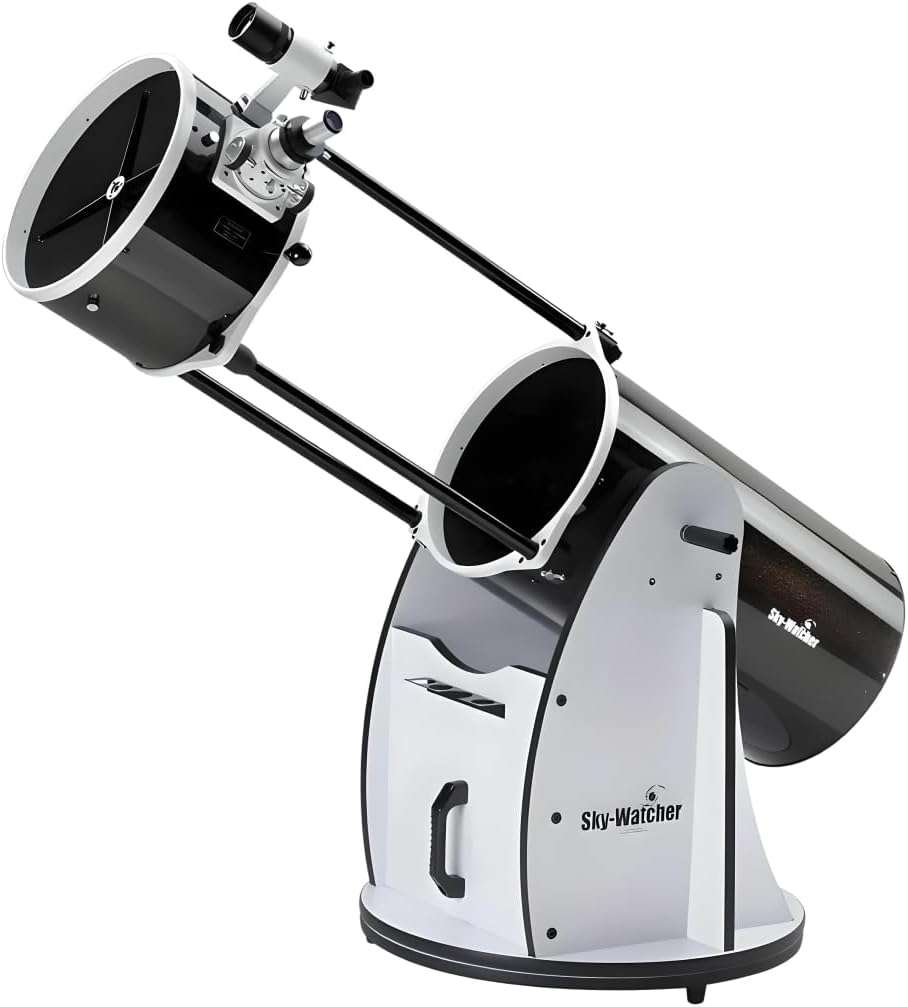
Another issue I’ve run into with reflecting telescopes is their size and weight. My larger reflector, a 10-inch Dobsonian, gives me incredible views, but hauling it around is no small task. Getting it into the car for trips to a dark sky site takes planning and effort. If you live in a small apartment or need something portable for frequent travel, a large reflector might not be the most convenient option.
Exposure to Dust and Dew
The open design of most reflecting telescopes means the mirrors are exposed to the elements. Dust, moisture, and even insects can find their way into the tube, which leads to the occasional need for cleaning and maintenance. I’ve learned the hard way that even a thin layer of dust on the primary mirror can subtly affect the quality of the image. While not difficult to clean with the right tools and care, it’s an extra step you’ll need to factor into your stargazing routine.
Balancing the Pros and Cons of Reflecting Telescopes
Looking back on my years of observing the night sky, I’ve developed a deep appreciation for what reflecting telescopes bring to the table. They offer remarkable image quality, especially for the price, and open up the cosmos in ways that some other types of telescopes simply can’t. However, the downsides, the need for regular alignment, vulnerability to the environment, and less-than-ideal portability, are real concerns that can affect your overall experience.
Understanding the full scope of the pros and cons of reflecting telescopes is what allowed me to make informed decisions about which telescope to use and when. While I’ve experimented with other designs, I keep coming back to my trusty reflector for serious skywatching sessions.
Types of Reflecting Telescopes
Reflecting telescopes all use mirrors to gather light, but there are different designs that change how the light is focused and how you see the image. Knowing the main types will help you choose the right one for your stargazing needs.
1. Newtonian Reflector
The Newtonian reflector is the most common type and a favorite among amateur astronomers. It uses a large primary mirror at the back of the tube and a small secondary mirror that reflects the light to the side.
Best for: Beginners and hobbyists.
Advantages: Affordable, simple design, wide field of view.
Disadvantages: Requires occasional alignment (collimation).
2. Cassegrain ReflectorA Cassegrain telescope uses a combination of a large concave primary mirror and a smaller convex secondary mirror. The light is directed back through a hole in the primary mirror to the eyepiece.
Best for: Planetary and lunar observations, astrophotography.
Advantages: Compact design, long focal length in a short tube.
Disadvantages: Usually more expensive than Newtonians.
The Schmidt-Cassegrain is a popular variation that combines mirrors with a correcting lens at the front. This design gives sharper images and reduces optical errors.
Best for: All-around use, including deep-sky viewing and photography.
Advantages: Portable, versatile, compatible with many accessories.
Disadvantages: Higher cost, can take time to cool down.
4. Ritchey-Chrétien TelescopeThe Ritchey-Chrétien design is often used in professional observatories and research, including the Hubble Space Telescope. It uses hyperbolic mirrors to reduce distortion.
Best for: Advanced astrophotography and research.Advantages: Extremely sharp and clear images, excellent for deep-sky imaging.Disadvantages: Very expensive, usually not for beginners.
Recommendations for Beginners Starting with Reflectors

If you’re just starting out and thinking about getting your first reflecting telescope, let me offer some advice that comes straight from experience.
Go with a Dobsonian Mount
Dobsonian reflectors are incredibly beginner-friendly. Their alt-azimuth mounts are easy to use and require no complicated tracking systems. A simple push-to design means you can focus on the sky instead of fiddling with buttons. My first Dobsonian gave me views that felt far beyond its price range, and I still recommend them to newcomers all the time.
Practice Collimation Early and Often
Don’t be afraid to learn how to collimate. It’s not as intimidating as it looks, and there are plenty of guides to walk you through it. Once you’ve done it a few times, it becomes second nature. A well-collimated telescope delivers breathtaking detail that makes the process worth every second.
Plan for Storage and Transport
Before buying a large reflector, consider how and where you’ll use it. If you have a dedicated space in your home for observing or plan to take it to a rural site regularly, make sure your car can accommodate it and that lifting the scope won’t become a chore. For casual backyard astronomy, a smaller reflector may be a better fit.
Reflectors in the Broader Astronomy Landscape
Even among seasoned astronomers, the debate around the pros and cons of reflecting telescopes continues. Some prefer the crisp images of high-end refractors, especially for planetary viewing, while others appreciate the raw power of large reflectors for deep sky exploration. Personally, I think there’s room for both in an astronomer’s toolkit. For those nights when I want to lose myself in the intricate arms of a distant galaxy, the reflector is my go-to.
What’s more, advancements in telescope technology continue to refine mirror coatings, improve collimation tools, and reduce weight, making today’s reflecting telescopes better than ever before.
What is a reflector telescope good for?A reflector telescope is excellent for viewing faint, deep-sky objects like galaxies, nebulae, and star clusters. Because it uses mirrors instead of lenses, it can gather more light at a lower cost, making it ideal for amateur astronomers who want clear and bright images of distant celestial objects.Which is better, a reflecting or refracting telescope?It depends on your needs. Reflecting telescopes are usually better for deep-sky viewing because they offer larger apertures at lower prices. Refracting telescopes, on the other hand, are great for viewing planets and the moon since they provide crisp, high-contrast images. If you want versatility and affordability, a reflector telescope is often the better choice. If you want sharp planetary views with less maintenance, a refractor may suit you.What are the disadvantages of a reflecting telescope?Reflecting telescopes can require more maintenance because the mirrors may need cleaning and occasional realignment (collimation). They are also bulkier compared to refractors of similar power, and the open design means the optics can collect dust more easily. Additionally, they may show slightly less contrast than refractors for planetary viewing.Does NASA use reflecting telescopes?
Yes. NASA uses reflecting telescopes for many of its missions. The most famous example is the Hubble Space Telescope, which uses a large primary mirror to capture light from distant galaxies and stars. NASA’s upcoming James Webb Space Telescope also uses an advanced segmented mirror design, further proving that reflectors are the preferred choice for professional space research.
Final Thoughts
Choosing the right telescope is a deeply personal decision, one that should be based on your observing goals, lifestyle, and budget. From my own journey, I can say that reflecting telescopes offer some of the best views you can get without breaking the bank. They do come with a learning curve and require a bit more upkeep, but the payoff is undeniably rewarding.
If your curiosity lies in exploring the dim and distant corners of the universe, and you don’t mind getting your hands dirty now and then, a reflecting telescope could become your favorite tool in the field. Just like it did for me.