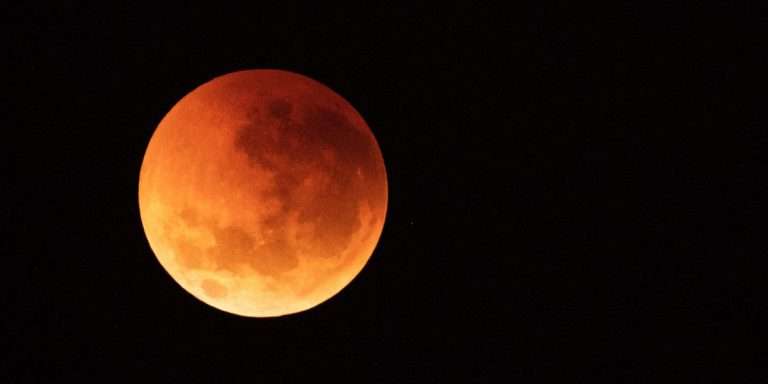
Reasons Why the Moon is Important to Earth
The Moon has always been a source of fascination, both for ancient civilizations and modern scientists. For as long as we’ve been able to gaze at the night sky, we’ve wondered about its significance and what it means for life on Earth. In my exploration of this subject, I’ve come to realize how incredibly important the Moon is to our planet, influencing everything from our oceans to our climate. In this article, I want to dive into the many reasons why the Moon is important to Earth, touching on its gravitational effects, its role in regulating the planet’s climate, and its impact on life as we know it.
The Moon’s Effect on Earth’s Tides
One of the most noticeable and essential effects the Moon has on Earth is its influence on ocean tides. The Moon’s gravity causes the water on Earth to be attracted toward it, creating what we know as tidal forces. These forces cause the water to bulge out at two points on Earth: one facing the Moon and the other directly opposite. This causes high and low tides throughout the day.
As I think about how this phenomenon affects the environment, I realize just how much tides shape life on Earth. Tides aren’t just a fascinating observation; they also influence ecosystems. Coastal habitats, where much of the world’s marine life resides, rely on these tidal movements to mix ocean waters, ensuring that nutrients are circulated, which is essential for sustaining marine organisms. These tidal patterns create a dynamic environment, where the rise and fall of the water bring in new food sources and allow organisms to thrive.
Without the Moon, these tidal forces would be much weaker, and the ecosystems that depend on them would struggle to exist in the same way. It’s fascinating to think about how this one force has shaped the very foundation of marine biology and how essential the Moon is in maintaining the health of our oceans.
The Moon’s Role in Stabilizing Earth’s Climate
The Moon also plays a vital role in stabilizing Earth’s climate. This may not be immediately obvious, but the Moon’s gravitational pull actually helps keep Earth’s axial tilt relatively stable. Earth’s axis is tilted at about 23.5 degrees, which is why we experience different seasons. Without the Moon, the axial tilt of Earth would be much more erratic, potentially leading to dramatic shifts in climate over time.
If Earth’s tilt varied significantly, we could see more severe temperature swings, possibly plunging our planet into ice ages or creating extreme heat periods. The Moon, with its gravitational influence, helps to dampen this tilt, ensuring that Earth’s climate remains relatively stable over thousands of years. This has allowed for the development of life as we know it, with seasons that allow plants to grow and animals to adapt to changing conditions.
It’s remarkable to think that such a small object in the sky could have such a profound effect on the global climate. The Moon’s ability to maintain Earth’s stability is one of the key reasons why the Moon is important to Earth.
The Moon and the Length of the Day

Another fascinating aspect of the Moon’s role in Earth’s life is its influence on the length of a day. While Earth spins on its axis, the Moon’s gravitational pull causes a slowing effect known as tidal friction. This effect gradually slows the rotation of Earth, meaning that days on Earth are getting longer over time.
This process occurs very slowly. Over millions of years, the day has grown by a fraction of a second, but that small change adds up over long periods of time. If the Moon didn’t exist, Earth would rotate more quickly, and our days would be much shorter. This slowing effect has had a major impact on life on Earth, influencing everything from how animals sleep to how our planet’s atmosphere circulates.
Considering that humans and other animals have adapted to Earth’s specific day-lengths, the Moon’s role in ensuring that days don’t change drastically is another reason why the Moon is important to Earth. Without it, life could have evolved in an entirely different way, with shorter days possibly leading to more rapid changes in the planet’s ecosystem.
The Moon’s Influence on Life
The Moon doesn’t only affect Earth in terms of the physical world but also plays a role in the behaviors of many living organisms. Certain animals, especially those living near the ocean, have adapted their behaviors to the rhythms of the Moon. For example, many species of fish spawn according to the lunar cycle, and sea turtles use the phases of the Moon to find their way back to nesting beaches.
Even on land, the Moon’s light has been shown to affect nocturnal creatures. Some animals use the Moon’s brightness to navigate at night, and its phases can impact when certain species become active. This connection to the lunar cycle has been ingrained in the behavior of these creatures over millennia, making the Moon an integral part of Earth’s ecosystems.
Human beings have also been influenced by the Moon for centuries. Various cultures have based their calendars and agricultural practices on the lunar cycle, aligning their activities with the changing phases of the Moon. The idea that the Moon has a subtle influence on human life has been a part of many cultural traditions, with people seeing the Moon as a symbol of time, fertility, and guidance.
The Moon’s Geological Influence
While we focus on Earth, the Moon itself provides a wealth of information about the history of our planet. The Moon’s surface has remained relatively unchanged for billions of years, preserving a record of ancient impacts from asteroids and comets. These craters, some of which are visible even with a small telescope, provide valuable insights into the early history of the solar system.
In contrast, Earth’s surface has been reshaped over time by plate tectonics, volcanic activity, and erosion, meaning much of the planet’s early history has been erased. The Moon, however, holds a clearer and more complete record of these events. This makes it an essential tool for scientists studying the history of the solar system and Earth’s formation.
The Future of Exploration: Why the Moon Is Important to Earth
Looking toward the future, the Moon is becoming more significant than ever. In recent years, there has been renewed interest in lunar exploration, with NASA and other space agencies planning missions to return humans to the Moon. These missions aim to study the Moon’s resources, including the potential for mining water ice at the lunar poles. This water could be used to support human colonies on the Moon or as fuel for space travel.
The Moon also serves as a stepping stone for future exploration beyond Earth, particularly in the direction of Mars. By establishing a presence on the Moon, we can learn how to live and work in space for extended periods. This knowledge will be invaluable for future missions to more distant locations in the solar system.
Conclusion
The reasons why the Moon is important to Earth are numerous and profound. From influencing tides to stabilizing our climate, lengthening our days, and shaping the behaviors of organisms, the Moon is integral to life on Earth. Its geological record provides valuable insights into the history of the solar system, and its future as a resource and a stepping stone for deeper space exploration is just beginning.
As we continue to explore the Moon and unlock more of its secrets, it will remain an essential part of the story of our planet. Its influence will continue to shape Earth’s future in ways we are only beginning to understand.