Maksutov-Cassegrain vs Newtonian Telescopes: A Detailed Comparison
As an astronomy enthusiast, I’ve spent quite a bit of time exploring different types of telescopes to better understand their functionality and advantages. One of the most debated topics I’ve come across is the comparison between Maksutov-Cassegrain and Newtonian telescopes. Both of these telescope designs are popular among amateur astronomers, but they offer very different experiences when it comes to their construction, performance, and usage. In this article, I’ll walk you through a detailed comparison of Maksutov-Cassegrain vs Newtonian telescopes, shedding light on their features, strengths, and which might suit your stargazing needs better.
What is a Maksutov-Cassegrain Telescope?
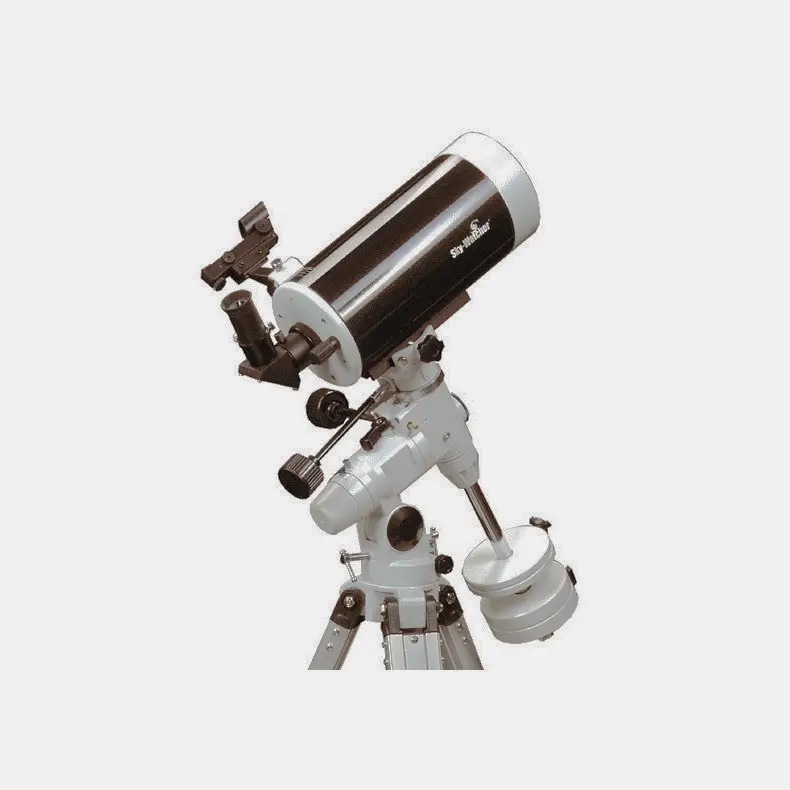
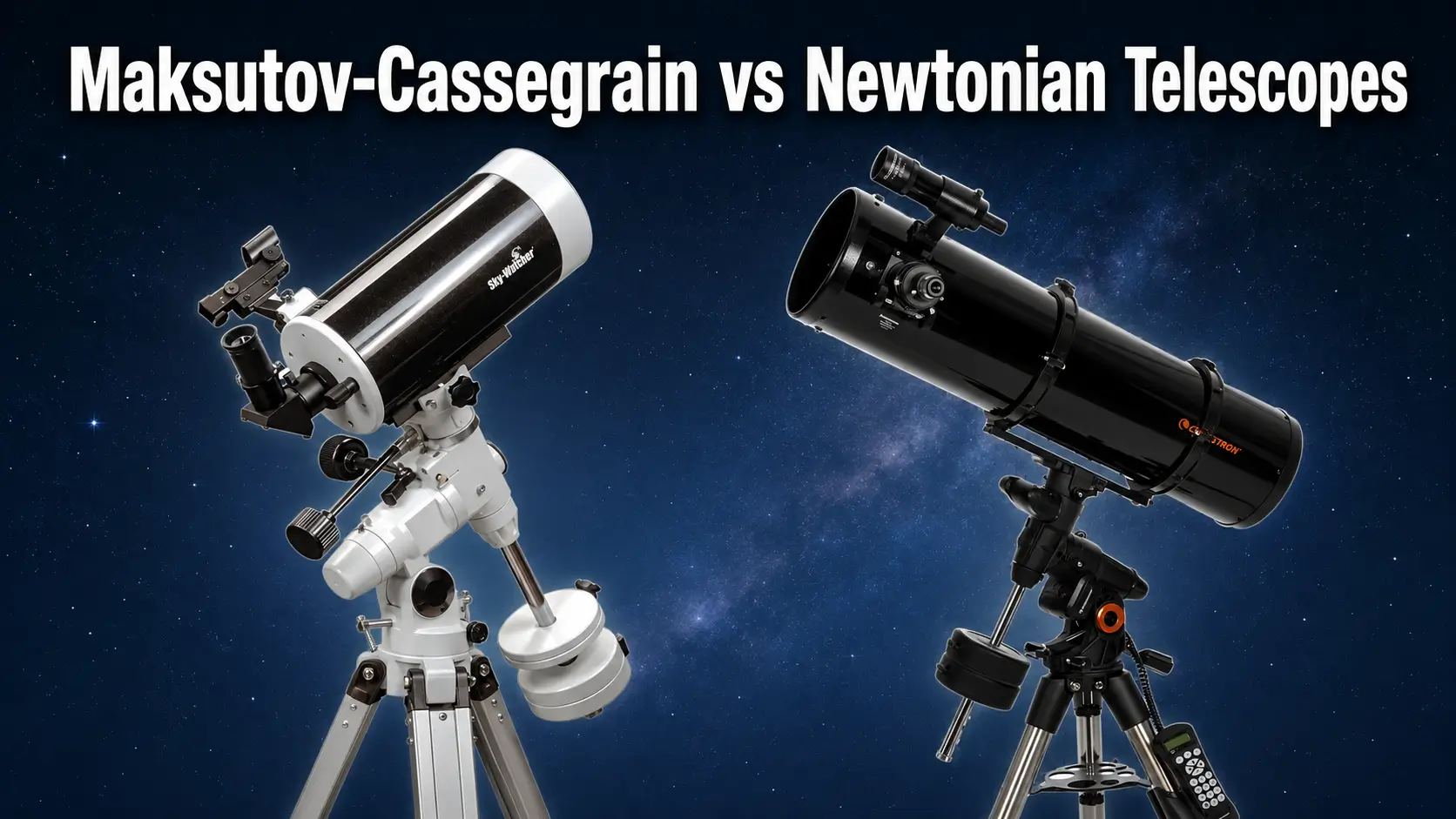
The Maksutov-Cassegrain telescope, also known as the Mak-Cass, is a type of catadioptric telescope that combines lenses and mirrors to gather and focus light. It is a compact, closed-tube telescope that features a spherical primary mirror and a secondary mirror that is typically integrated into the corrector plate. The result is a high-quality, sharp image ideal for planetary observation and detailed lunar views.
Maksutov-Cassegrain telescopes are renowned for their versatility and portability. With a long focal length and relatively short physical length, they provide high magnification without requiring a large and bulky setup. For those who have limited space or enjoy traveling to dark sky locations, the compact nature of the Maksutov-Cassegrain design makes it a convenient choice.
Key Features of the Maksutov-Cassegrain Telescope
What sets Maksutov-Cassegrain telescopes apart is their sealed optical tube. The sealed design protects the internal mirrors and lenses from dust, dirt, and other environmental factors, making them lower maintenance than open-tube designs. Additionally, the corrector lens in the front of the telescope corrects any optical aberrations, such as spherical aberration, leading to crisp, sharp images that are ideal for planetary and lunar observations.
These telescopes are excellent for observers who want to explore planets, the Moon, and other solar system objects. Their optical clarity makes them a preferred choice for those seeking detailed views of Jupiter’s moons, Saturn’s rings, and lunar craters.
What is a Newtonian Telescope?
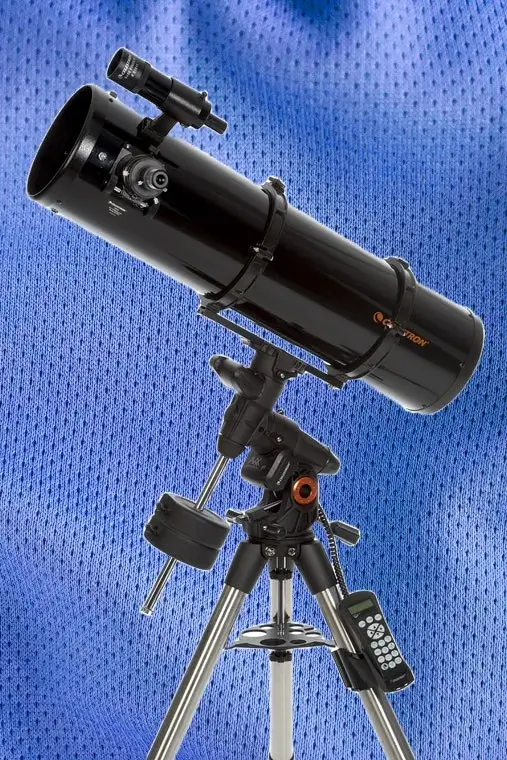
Newtonian telescopes are a type of reflector telescope first designed by Sir Isaac Newton in the 17th century. Unlike the Maksutov-Cassegrain design, Newtonian telescopes use only mirrors to gather and focus light. The primary mirror is parabolic in shape, helping to eliminate spherical aberration, which can distort images. The secondary mirror, mounted at a 45-degree angle, reflects light from the primary mirror to an eyepiece located at the side of the telescope.
While Newtonian telescopes are larger in size and have an open-tube design, they are known for providing an excellent field of view and high light-gathering capability. They are particularly effective for deep-sky observations, where capturing faint light from distant galaxies and nebulae is essential.
Key Features of the Newtonian Telescope
Newtonian telescopes are straightforward in design and often more affordable than other types of telescopes. They typically provide a large aperture at a relatively lower price point, giving amateur astronomers more light-gathering power. This makes them particularly useful for those who want to explore deep-sky objects like galaxies, star clusters, and nebulae.
The open-tube design of the Newtonian telescope allows for faster cooling of the optics, which is an advantage when observing objects that require precise details over extended periods of time. However, the design also makes them more susceptible to dust and requires more frequent maintenance and collimation (adjusting the mirrors to keep them aligned).
Comparing Maksutov-Cassegrain vs Newtonian Telescopes
1. Optical Design
The primary difference between Maksutov-Cassegrain and Newtonian telescopes is in their optical design. Maksutov-Cassegrain telescopes combine both lenses and mirrors, while Newtonian telescopes use mirrors exclusively. This gives Maksutov-Cassegrain telescopes a compact and portable design, ideal for astronomers on the go.
In contrast, Newtonian telescopes tend to be larger, with an open-tube design that allows for better ventilation and faster cooling of the optics. They are typically more affordable than Maksutov-Cassegrain telescopes and offer a wider field of view, making them perfect for deep-sky observation.
2. Image Quality
When it comes to image quality, both types of telescopes are capable of producing sharp, detailed images. Maksutov-Cassegrain telescopes excel in planetary and lunar observations, providing high contrast and clarity. Their closed-tube design and corrector plate help reduce optical aberrations, ensuring a crisp and clean image.
Newtonian telescopes, on the other hand, are better suited for deep-sky viewing. While they may not offer the same level of contrast as Maksutov-Cassegrain telescopes, they are excellent for viewing large celestial objects like nebulae, galaxies, and star clusters. They also tend to offer a more expansive field of view, which is essential for observing these larger objects.
3. Portability
Maksutov-Cassegrain telescopes are compact and lightweight, making them highly portable. Their long focal length relative to their size means they offer high magnification without requiring a large, bulky instrument. If you’re someone who enjoys traveling to different observing locations or if storage space is a concern, the Maksutov-Cassegrain design will likely suit your needs best.
Newtonian telescopes, due to their open-tube design and larger size, are bulkier and less portable. However, they offer superior light-gathering capability and a more affordable price, making them a popular choice for astronomers who prioritize performance over portability.
4. Maintenance and Durability
Maksutov-Cassegrain telescopes are relatively low-maintenance due to their sealed optical tube. This design helps keep dust and debris out, reducing the need for frequent cleaning and maintenance. The secondary mirror is housed inside the corrector plate, which also reduces the risk of misalignment.
Newtonian telescopes, with their open-tube design, are more susceptible to dust and dirt. Regular cleaning and collimation are necessary to maintain optimal performance. However, this design also makes it easier to make adjustments to the mirrors and replace parts when needed.
5. Cost
Maksutov-Cassegrain telescopes tend to be more expensive than Newtonian telescopes, primarily due to their complex design and high-quality optics. While the upfront cost may be higher, the image quality, compactness, and durability make them a good investment for serious astronomers.
Newtonian telescopes are more budget-friendly and offer a larger aperture for the price. For amateur astronomers looking for a telescope that offers good value for money and is capable of viewing both planetary and deep-sky objects, the Newtonian design is a solid choice.
Conclusion
The decision between Maksutov-Cassegrain vs Newtonian telescopes depends largely on your personal preferences, observing goals, and budget. If you’re looking for a compact, portable telescope with excellent planetary and lunar performance, a Maksutov-Cassegrain telescope may be the right fit. On the other hand, if you prefer a telescope with a larger aperture and a wider field of view for deep-sky observations, the Newtonian telescope could be a better option.
Both types of telescopes have their strengths and weaknesses, but they share one common goal: to bring the beauty of the night sky into sharp focus. By considering the factors that matter most to you—whether it’s portability, image quality, or cost—you’ll be better equipped to choose the right telescope for your stargazing adventures.