The History of 17th Century Astronomical Discoveries
Whenever I look up at the night sky, I’m reminded of a time when those twinkling lights were still part of a great unknown. The 17th century was one of the most pivotal periods in the evolution of astronomy, a time when the universe began to reveal its secrets to a new breed of thinkers, scientists, and star-gazers who dared to challenge tradition. Major astronomical discoveries of 17th century is more than just the sum of telescopes and theories. It’s a transformative journey that forever altered humanity’s relationship with the cosmos.
A New Lens on the Universe

I’ve often imagined how exhilarating it must have been when Galileo Galilei first turned his enhanced telescope toward the stars in 1609. With that one act, he set in motion a cascade of discoveries that would challenge centuries of established belief. Suddenly, celestial objects once thought to be smooth and perfect were seen as textured and dynamic. The Moon had mountains and craters. The Milky Way was not just a milky smear but a dense collection of stars.
Most shocking of all was Galileo’s observation of Jupiter’s four largest moons. Known today as the Galilean moons, they orbited the giant planet independently, defying the geocentric model that placed Earth at the center of everything. That moment marked one of the first cracks in the Aristotelian worldview and pushed the boundaries of how we understood our place in the universe.
Galileo’s Role in Shifting Perceptions
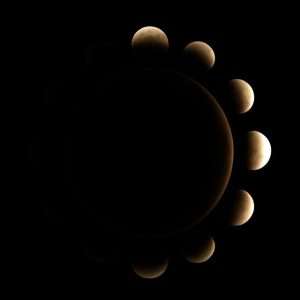
What I find remarkable about Galileo wasn’t just his technical innovation, it was his willingness to question dogma. When he noticed the phases of Venus, he correctly deduced that the planet must orbit the Sun. This directly contradicted the prevailing belief that all celestial bodies revolved around Earth.
The history of 17th century astronomical discoveries is incomplete without acknowledging the resistance faced by thinkers like Galileo. His discoveries eventually led him into conflict with the Roman Catholic Church, culminating in a dramatic trial and subsequent house arrest. But the seeds he planted would continue to grow, as others picked up where he left off, using both his methods and his courage as inspiration.
The Mathematical Mind of Johannes Kepler
While Galileo was opening up the skies with his telescope, Johannes Kepler was decoding the hidden mathematical patterns behind planetary motion. His contribution to astronomy was equally monumental, albeit in a different way. Kepler’s theories were grounded in meticulous observations gathered by Tycho Brahe, a Danish nobleman and one of the most detailed astronomers of his time.
Kepler’s three laws of planetary motion broke the mold. They revealed that planets didn’t move in perfect circles, as Aristotle had claimed, but in ellipses. That may sound subtle, but it was a groundbreaking shift that more accurately described planetary orbits.
What strikes me is how Kepler’s work brought elegance to what had been messy data. He proved that the universe was not random or unknowable, it followed precise laws. For an amateur astronomer like me, this makes Kepler one of the most influential figures in the history of 17th century astronomical discoveries. He showed that math and physics could bring the cosmos into focus in ways we had never imagined.
Isaac Newton and the Gravity of it All
As the century progressed, another intellectual force emerged who would pull all these scattered ideas into one unified vision. Isaac Newton took the observational insights of Galileo and the mathematical brilliance of Kepler and forged them into a cohesive theory that could explain how and why celestial bodies move.
Newton’s Principia Mathematica, published in 1687, is often viewed as one of the most important scientific texts in history. In it, he proposed the law of universal gravitation and the three laws of motion. These principles didn’t just apply to apples falling from trees, they applied to the Moon, the planets, and even comets.
To me, Newton’s contribution to the history of 17th century astronomical discoveries is nothing short of poetic. He found the common thread connecting the movement of the stars with life on Earth. His work gave us the tools to understand not just where planets were, but how they got there and how they would move in the future.
Christiaan Huygens and the Moons of Saturn
One of the most captivating aspects of this golden century of astronomy was how far we began to see beyond our immediate planetary neighbors. Dutch scientist Christiaan Huygens, for example, built a telescope that allowed him to peer more deeply into the mysteries of Saturn.
In 1655, he discovered Titan, the largest of Saturn’s moons. But what fascinated him even more was the strange shape of Saturn itself. Earlier astronomers had described it as having “ears.” Huygens correctly interpreted these features as rings, theorizing that Saturn was surrounded by a thin, flat disk of material.
That kind of conceptual leap fascinates me. Huygens wasn’t just making observations, he was thinking imaginatively, turning raw images into structured theories. His work is a testament to the role of creativity in scientific discovery.
Giovanni Cassini and Expanding the Saturnian System
Building upon Huygens’ foundation, Italian-born astronomer Giovanni Domenico Cassini contributed significantly to our understanding of Saturn and its surroundings. Cassini identified four more of Saturn’s moons and observed a gap in the planet’s rings that now bears his name, the Cassini Division.
What makes Cassini particularly interesting is that he worked within one of the earliest organized observatories, the Paris Observatory, where he became its first director. His discoveries represent a shift toward institutionalized science, where observation became a collaborative and continuous effort rather than an isolated endeavor.
In many ways, Cassini was a transitional figure, blending the independent inquiry of earlier astronomers with the growing trend of formal scientific institutions.
The Rise of Observatories and Scientific Societies
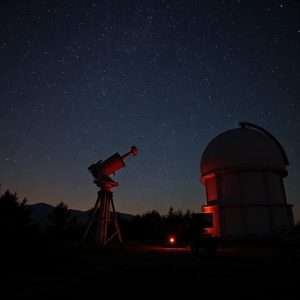
During the 17th century, astronomy matured from a hobby of noblemen and philosophers into a formal science backed by public and royal support. The establishment of observatories, such as the Royal Observatory in Greenwich and the Paris Observatory, allowed for consistent, long-term studies of the night sky.
These centers attracted some of the greatest minds of the time and began developing standardized methods for data collection. The formation of scientific societies, like the Royal Society of London, further legitimized the field and encouraged cross-border collaboration.
As someone who’s spent countless nights gazing at stars through a backyard telescope, I appreciate how these institutions laid the groundwork for the global astronomical community we have today. They made it possible for future generations, ours included, to build on a strong foundation of knowledge.
A Legacy Written in the Stars
Looking back on the history of 17th century astronomical discoveries, I’m struck by how transformative that era was. In just a few generations, humanity went from seeing the universe as a fixed, Earth-centered dome to recognizing it as a vast, dynamic system governed by natural laws.
It was a century marked by bold questions, detailed observations, and daring conclusions. The thinkers of the 1600s weren’t just scientists, they were revolutionaries, dreamers, and visionaries. Their courage to challenge the known paved the way for every modern space probe, every satellite image, and every astrophysics class taught today.
Conclusion
The history of 17th century astronomical discoveries is not just about telescopes and equations, it’s a profound shift in how we see ourselves in the cosmos. From Galileo’s controversial observations to Newton’s elegant laws, from Kepler’s precise orbits to Huygens and Cassini’s distant moons, this period reshaped our understanding of everything above us.
As I continue exploring the stars through my own amateur efforts, I carry a deep sense of gratitude for those early pioneers. They looked through simple lenses and saw an infinite universe. And in doing so, they gave us all the gift of perspective, a reminder that we are a small part of something truly magnificent.