Fun Facts About Venus: Unveiling the Mysteries of Earth’s Twin
Venus, our neighboring planet, holds many fascinating secrets. Known as Earth’s “sister planet,” Venus shares many similarities with our home world, but it also has some unique features that make it stand out in the solar system. As we look deeper into Venus, there are some fun facts about Venus that may surprise you. From its unusual rotation to its extreme temperatures, Venus never fails to intrigue scientists and skywatchers alike.
Venus’ Day is Longer Than Its Year
One of the most surprising fun facts about Venus is its strange rotation. A single day on Venus lasts longer than a year on the planet. Venus takes about 225 Earth days to complete an orbit around the Sun. However, it takes 243 Earth days to rotate once on its axis. This means that one day on Venus is longer than its year! To make things even more interesting, Venus rotates in the opposite direction from most planets in our solar system. Instead of spinning in the same direction as its orbit (which is called prograde rotation), Venus spins in the opposite direction, known as retrograde rotation. This causes the Sun to rise in the west and set in the east, a phenomenon that is quite different from what we experience on Earth.
The Hottest Planet in the Solar System
When most people think of the hottest planet in our solar system, they may first think of Mercury since it’s the closest planet to the Sun. However, the truth is that Venus is actually the hottest planet in the solar system. Venus has an average surface temperature of around 464°C (867°F), which is hotter than Mercury, despite being farther from the Sun. This intense heat is primarily due to the thick atmosphere of Venus, which is mostly composed of carbon dioxide. This creates a runaway greenhouse effect that traps heat, making Venus an unbearable, furnace-like planet. The planet’s surface is hot enough to melt lead, and the heat remains constant across the entire planet, both day and night.
Acid Rain, But It Never Reaches the Ground

Another striking feature of Venus is the presence of acid rain. Venus’ thick clouds are composed of sulfuric acid, and while it does rain on the planet, the rain never reaches the surface. The temperature of the lower atmosphere is so high that the sulfuric acid vaporizes before it can hit the ground. This creates a truly bizarre weather system. So, although it sounds like Venus might be drenched in a toxic acid rainstorm, the rain evaporates long before it can cause any damage to the surface.
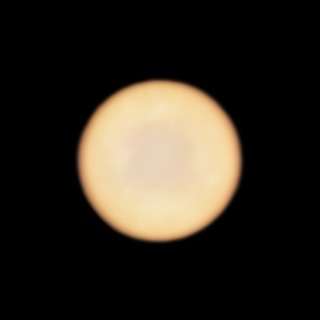
The clouds on Venus are also responsible for its yellowish appearance when viewed from space. These clouds not only trap heat but also contribute to the planet’s constant cloud cover, which makes it nearly impossible to observe Venus’ surface directly from Earth. Space missions, such as NASA’s Magellan mission, have used radar to map Venus’ surface, giving us an idea of what the planet looks like beneath the clouds.
The Surface of Venus is a Volcanic Wasteland
When we think of Earth, we often picture diverse landscapes, with towering mountains, deep valleys, and vast oceans. However, Venus’ surface is vastly different. Venus is a volcanic wasteland. Scientists believe that Venus has thousands of volcanoes, and many of these volcanoes are likely still active today. These volcanoes have shaped the planet’s surface and have contributed to its extremely smooth terrain. Venus does not have many craters, which suggests that its surface has been repaved by volcanic activity over millions of years.
What makes Venus’ volcanoes particularly interesting is that they are thought to be “shield volcanoes,” similar to the ones found on Earth’s Hawaiian islands. These volcanoes have broad, gently sloping sides and are formed by the eruption of low-viscosity lava, which can spread out over a large area. The absence of tectonic plate activity on Venus means that its volcanoes don’t follow the same processes we see on Earth, and they have unique characteristics.
Venus Lacks a Moon
Venus is one of only two planets in our solar system that does not have a natural satellite, or moon. The absence of a moon has left scientists speculating about the reasons behind it. Some believe that Venus may have once had a moon, but it was ejected into space due to a collision with another celestial object. Others suggest that Venus simply never managed to capture a moon in its orbit. Unlike Earth, which experiences tidal forces due to the gravitational pull of the Moon, Venus is unaffected by these forces. Without a moon, Venus does not experience the same kinds of tides and gravitational effects that Earth does, which makes it an interesting subject of study for astronomers.
A Mysterious, Dense Atmosphere
Venus’ atmosphere is another intriguing aspect of the planet. It is made up primarily of carbon dioxide, with small amounts of nitrogen and other gases. This thick atmosphere is about 90 times denser than Earth’s, and it plays a major role in trapping heat on the planet’s surface. The atmosphere of Venus is also highly reflective, which contributes to the planet’s brightness when viewed from Earth. In fact, Venus is one of the brightest objects in the night sky, often outshining all the stars in the constellation.
The atmosphere’s composition is also what gives Venus its dense, cloud-covered appearance. The clouds are made of sulfuric acid droplets, which reflect much of the sunlight that reaches the planet. These clouds create a permanent yellowish hue, and they contribute to the harsh weather conditions on Venus. While Venus’ surface is largely inaccessible due to the extreme conditions, the study of its atmosphere has provided valuable insights into planetary atmospheres and the greenhouse effect.
Venus is a Mysterious World
Despite all the research that has been conducted, Venus remains one of the most mysterious planets in our solar system. It’s a world of extremes, from its scorching surface temperatures to its dense, toxic atmosphere. Venus continues to challenge scientists as they strive to understand how it formed, how it developed its unique features, and how it differs from Earth.
In recent years, space missions to Venus, such as NASA’s VERITAS and DAVINCI missions, have been proposed to study the planet in greater detail. These missions will help scientists learn more about Venus’ geological history, its atmosphere, and the potential for volcanic activity. With future exploration, we may begin to uncover even more fun facts about Venus, further deepening our understanding of this fascinating world.
Conclusion
Venus is a planet of extremes and mysteries, from its scorching surface temperatures to its unusual rotation. The fun facts about Venus are endless, and with each new discovery, scientists continue to be amazed by the complexities of this neighboring world. As we continue to explore Venus, we may unlock even more secrets about its past and its potential for future exploration.