Types of Nebula: A Walkthrough Of The Universe’s Most Spectacular Stellar Nurseries
Have you ever looked up at the night sky and wondered about those colorful, cloudy patches scattered among the stars? Those beautiful cosmic clouds are called nebulae, and they’re some of the most amazing sights in our universe. Whether you’re just starting to explore astronomy or you’ve been stargazing for years, understanding the different types of nebulae will open your eyes to incredible stories happening billions of miles away.
Think of nebulae as the universe’s recycling centers and nurseries all rolled into one. Some are busy creating brand new stars, while others are the final breath of dying giants. Each type tells a different story about how stars are born, live, and die. Let’s explore these cosmic wonders together and discover what makes each one special.
What Are Nebulae?
Nebulae are enormous clouds of gas and dust floating in space. The word “nebula” comes from Latin and means “cloud” or “mist.” These space clouds can be hundreds of light years across, which is mind boggling when you think about it. They’re made mostly of hydrogen gas with some helium and tiny particles of dust mixed in.
What makes nebulae so fascinating is their role in the cosmic cycle of life and death. They’re where new stars are born, and they’re also what’s left behind when old stars die. This makes them essential to understanding how our universe works and how elements that make up planets and even us got scattered throughout space.
Types of Nebula

1. Emission Nebulae: The Universe’s Neon Signs
Emission nebulae are like giant neon signs in space, glowing with their own light. These nebular regions shine because nearby hot, young stars pump out so much energy that they make the surrounding gas glow. The most common color you’ll see is red, which comes from hydrogen gas getting excited by starlight.
How Emission Nebulae Work
When massive, hot stars form inside these gas clouds, they give off intense ultraviolet radiation. This energy hits the hydrogen atoms around them and makes them glow, similar to how a neon sign works. The process is called ionization, and it creates those stunning red and pink colors we see in space photos.
Famous Emission Nebulae
The Orion Nebula is probably the most famous example of an emission nebula. You can actually see it with the naked eye on clear winter nights as the fuzzy “star” in Orion’s sword. Other spectacular examples include the Eagle Nebula, famous for its “Pillars of Creation” photo, and the Rosette Nebula, which looks like a cosmic rose.
These stellar nurseries are where some of the biggest and brightest stars in our galaxy are born. The Eagle Nebula alone is creating dozens of new stars right now, and some of them will be many times more massive than our Sun.
Observing Tips
If you want to see emission nebulae through a telescope, look for that characteristic red glow. A hydrogen alpha filter can help bring out the details, but even without special equipment, many emission nebulae are bright enough to see with a basic telescope under dark skies.
2. Reflection Nebulae: Cosmic Mirrors
Reflection nebulae don’t make their own light like emission nebulae do. Instead, they act like cosmic mirrors, reflecting light from nearby stars. These nebular clouds are typically blue because blue light scatters off dust particles more easily than other colors. It’s the same reason our sky looks blue during the day.
How They Form
Reflection nebulae form when starlight hits clouds of dust and gas. The tiny dust particles scatter the light in all directions, making the whole cloud visible. Since blue light gets scattered more than red light, these nebulae usually appear blue in photos and through telescopes.
Notable Examples
The most famous reflection nebula surrounds the Pleiades star cluster, also known as the Seven Sisters. If you look at the Pleiades through binoculars or a small telescope, you might notice a faint blue haze around the brightest stars. That’s the reflection nebula.
Another beautiful example is the Witch Head Nebula, which gets its spooky name from its shape. The bright star Rigel illuminates this cosmic dust cloud, creating an eerie blue glow that really does look like a witch’s profile.
What Makes Them Special
Reflection nebulae show us that space isn’t empty. Even in regions that look dark to our eyes, there are often clouds of dust and gas waiting for the right star to light them up. They also help astronomers study the composition of interstellar dust and understand how light travels through space.
3. Dark Nebulae: Shadows in Space
Dark nebulae might seem less exciting than their glowing cousins, but they’re equally important in the story of stellar evolution. These are dense clouds of gas and dust that are so thick they block out the light from stars behind them. Instead of glowing, they appear as dark patches against the star filled background of space.
Understanding Dark Clouds
These nebular structures are among the coldest places in the universe, with temperatures just a few degrees above absolute zero. The dust particles in these clouds absorb visible light, which is why they look dark. But if you could see in infrared light, many of these clouds would be glowing with heat from forming stars inside them.
Famous Dark Nebulae

The Horsehead Nebula is probably the most recognizable dark nebula. It looks exactly like a horse’s head silhouetted against a glowing background. The Coal Sack Nebula, visible from the Southern Hemisphere, looks like a dark hole punched in the Milky Way.
Barnard 68 is another fascinating example. This small, round dark nebula is so dense that it completely blocks the light from about 3,500 background stars. Astronomers use these objects to study star formation because many dark nebulae are actually stellar nurseries in their earliest stages.
Their Role in Star Formation
Don’t let their dark appearance fool you. These regions are often where the most active star formation happens. The dense gas and dust provide the raw materials for new stars, and the cold temperatures help gravity pull matter together. Many of today’s bright young stars were born inside what once looked like empty dark patches in space.
4. Planetary Nebulae: Stellar Swan Songs
Despite their name, planetary nebulae have nothing to do with planets. Early astronomers gave them this name because through small telescopes, they looked like the round, greenish disks of distant planets. In reality, these are the beautiful final acts of dying stars.
How Planetary Nebulae Form
When a star similar to our Sun reaches the end of its life, it starts to run out of fuel in its core. The star becomes unstable and begins to puff off its outer layers in a series of gentle explosions. These expelled layers form expanding shells of gas around the dying star’s hot core, which becomes a white dwarf.
The white dwarf in the center is incredibly hot and gives off intense ultraviolet light. This energy makes the surrounding gas glow in brilliant colors, creating some of the most beautiful objects in the night sky.
Iconic Examples
The Ring Nebula is perhaps the most famous planetary nebula. Through a telescope, it looks like a cosmic donut with a white dwarf star in the center. The Cat’s Eye Nebula shows incredibly complex structures that scientists are still trying to understand, with knots, jets, and symmetrical patterns that look almost designed.
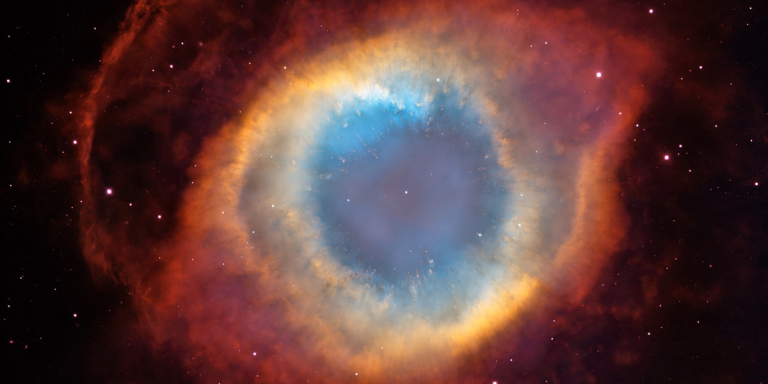
The Helix Nebula, often called the “Eye of God,” is the closest planetary nebula to Earth. It’s so large that it covers an area of sky similar to half the width of the full Moon.
What They Teach Us
Planetary nebulae give us a preview of what will happen to our own Sun in about 5 billion years. They also play a crucial role in enriching space with heavy elements. The dying stars that create these nebulae scatter carbon, nitrogen, oxygen, and other elements throughout space, providing the building blocks for future generations of stars and planets.
5. Supernova Remnants: Explosive Aftermaths
When the most massive stars in the universe die, they don’t go quietly like the stars that form planetary nebulae. Instead, they explode in spectacular supernova events that can briefly outshine entire galaxies. The expanding shockwaves from these explosions create supernova remnants, some of the most energetic and complex nebular structures in space.
The Birth of a Supernova Remnant
When a star at least eight times more massive than our Sun runs out of fuel, its core collapses in less than a second. This creates a shockwave that tears through the star, blasting its outer layers into space at speeds of thousands of miles per second. The explosion creates a rapidly expanding shell of hot gas that sweeps up material from the surrounding space.
Prime Examples
The Crab Nebula is the most studied supernova remnant. Chinese astronomers recorded the original explosion in 1054 AD, noting that it was bright enough to see during the day. Today, we can see the expanding shell of gas still moving outward from that ancient explosion. At its center sits a pulsar, a rapidly spinning neutron star that flashes 30 times per second.
The Veil Nebula is a much older supernova remnant that’s spread out over a large area of sky. Its delicate, lace like filaments show the complex interactions between the blast wave and the interstellar medium.
Scientific Importance
Supernova remnants are cosmic element factories. The explosion creates and scatters heavy elements throughout space, including iron, nickel, and gold. These elements eventually become part of new stars, planets, and even living beings. The iron in your blood was forged in the heart of a massive star and scattered by a supernova explosion billions of years ago.
Comparing the Different Types
Each type of nebula has its own characteristics that help astronomers identify them:
Size: Planetary nebulae are usually the smallest, typically less than a light year across. Dark nebulae can be enormous, stretching for hundreds of light years. Emission nebulae and supernova remnants fall somewhere in between.
Temperature: Dark nebulae are the coldest, often just 10 degrees above absolute zero. Emission nebulae can reach temperatures of 10,000 degrees or more. Supernova remnants have regions that are millions of degrees hot.
Colors: Emission nebulae are typically red or pink from hydrogen. Reflection nebulae appear blue. Planetary nebulae can show many colors depending on what elements are present. Supernova remnants often show a mix of colors from different elements and temperatures.
Lifespan: Dark nebulae can exist for millions of years. Emission nebulae last as long as the hot stars that light them up. Planetary nebulae fade away in about 50,000 years. Supernova remnants can remain visible for hundreds of thousands of years.
Observing Nebulae: A Practical Guide
You don’t need expensive equipment to start exploring these cosmic wonders. Here’s how to get started:
For Beginners
Start with the brightest nebulae that you can see with binoculars or a small telescope. The Orion Nebula is visible to the naked eye and spectacular through any optical instrument. The Pleiades cluster and its reflection nebula make a great target for binoculars.
Equipment Recommendations
A basic telescope will show you dozens of nebulae. For better views, consider these additions:
Light pollution filter: Helps block city lights and makes nebulae stand out better. Hydrogen alpha filter: Brings out details in emission nebulae. OIII filter: Great for planetary nebulae and some emission nebulae.
Best Viewing Conditions
Dark skies make the biggest difference when observing nebulae. Even a small telescope under truly dark skies will show more than a large telescope in the city. New moon periods provide the darkest conditions.
Many nebulae are best viewed in different seasons. The Orion Nebula dominates winter skies, while summer brings the rich star forming regions toward the center of our galaxy.
Photography Tips
Modern digital cameras make nebula photography more accessible than ever. Even basic DSLR cameras can capture stunning images with the right techniques:
Long exposures: Most nebulae require exposures of several minutes to bring out their colors and details. Tracking mount: Essential for long exposures to keep stars from trailing. Multiple exposures: Stack many shorter exposures for better results than one very long exposure.
The Role of Nebulae in Cosmic Evolution
Nebulae aren’t just pretty objects to admire. They’re essential players in the ongoing story of our universe. Every type of nebula contributes to what astronomers call the “cosmic cycle.”
Star Formation Factories
Emission nebulae and dark nebulae are where new stars are born. These stellar nurseries contain the raw materials needed to create the next generation of stars. Some of these regions are incredibly active, forming hundreds of new stars over just a few million years.
Chemical Enrichment
Planetary nebulae and supernova remnants spread heavy elements throughout space. These elements, created in the cores of dying stars, become incorporated into new generations of stars and planets. This process has been enriching our galaxy for billions of years.
Galactic Recycling
The universe is remarkably efficient at recycling its materials. Gas expelled by dying stars eventually gets swept up into new star forming regions. Some of the atoms in your body may have been part of multiple stars throughout cosmic history.
Future Discoveries
New space telescopes are revealing nebulae in unprecedented detail. The James Webb Space Telescope can see through dust that blocks visible light, showing us star formation happening inside dark nebulae. Future missions will help us understand how these processes work and how they’ve shaped our galaxy.
What are the 4 types of nebula?
Astronomers usually group nebulae into four main types:
Emission nebulae – clouds that glow because nearby stars energize their gas.
Reflection nebulae – clouds that shine by reflecting starlight.
Dark nebulae – dense clouds of dust that block light and appear as dark patches.
Planetary nebulae – shells of gas thrown off by dying stars.
Common Questions
What are the 4 famous nebulae?
Four well-known nebulae that are often highlighted in astronomy are the Orion Nebula, the Crab Nebula, the Eagle Nebula with its Pillars of Creation, and the Helix Nebula, sometimes called the Eye of God.
What are the classification of nebulae?
Nebulae are classified by how they interact with light and how they form. The main classifications are emission, reflection, dark, and planetary nebulae, along with supernova remnants, which are sometimes grouped separately. Each type has different characteristics and tells a different part of the story of stars.
How many nebulae are there in the universe?
It is impossible to count the exact number of nebulae in the universe. Within our own Milky Way galaxy, astronomers have cataloged thousands of nebulae, and new ones are still being discovered. Since there are billions of galaxies, the total number of nebulae across the universe is likely in the billions or more.
Final Thoughts
The different types of nebulae tell the complete story of stellar life and death in our universe. From the dark, cold clouds where stars are born to the glowing shells left behind when they die, each type plays its part in the cosmic dance that has been going on for billions of years.
What I find most amazing about nebulae is how they connect us to the universe in such a personal way. The calcium in our bones, the iron in our blood, and the oxygen we breathe were all forged in the hearts of ancient stars and scattered by the same processes that create the beautiful nebulae we see today. When you look at these cosmic clouds, you’re not just seeing distant objects. You’re seeing the factories that created the very elements that make life possible.
Whether you’re planning your first night under the stars or you’ve been exploring the cosmos for years, nebulae offer endless wonder and discovery. Each one has its own story to tell, and new details emerge every time you look. So grab a pair of binoculars, find a dark spot away from city lights, and prepare to be amazed by these spectacular stellar nurseries that light up our night sky.