Can a Telescope See the Flag on the Moon?
As someone passionate about astronomy, I often find myself contemplating the endless wonders of space. One question that frequently pops up in discussions is whether it’s possible to spot the American flag placed on the Moon during the Apollo missions. The sight of astronauts planting the flag in the lunar soil is one of the most iconic moments in human history, but in the era of modern telescopes, I couldn’t help but wonder: can a telescope see the flag on the moon? After all, with the advancements in telescope technology, wouldn’t it be feasible to spot such an important symbol of human achievement?
The Flag on the Moon: A Historic Moment

Before diving into whether we can observe the flag today, it’s important to take a moment to reflect on the historical significance of that flag. When Neil Armstrong and Buzz Aldrin set foot on the Moon in 1969, it marked a giant leap for mankind. During the Apollo 11 mission, Armstrong famously planted the American flag on the Moon’s surface, a monumental moment that symbolized the culmination of years of scientific achievement and human ambition. The flag was made of nylon, designed to withstand the harsh conditions on the Moon, and it measured about 5 feet by 3 feet in size.
In subsequent missions, Apollo astronauts also planted flags at their landing sites. However, the original flag planted by Armstrong and Aldrin is often the one that draws the most attention. Over the years, there’s been growing curiosity about whether these flags, particularly the one from Apollo 11, can be seen through a telescope. After all, given the vast capabilities of modern telescopes, can a telescope see the flag on the moon today?
The Challenge: Flag’s Size and the Telescope’s Power

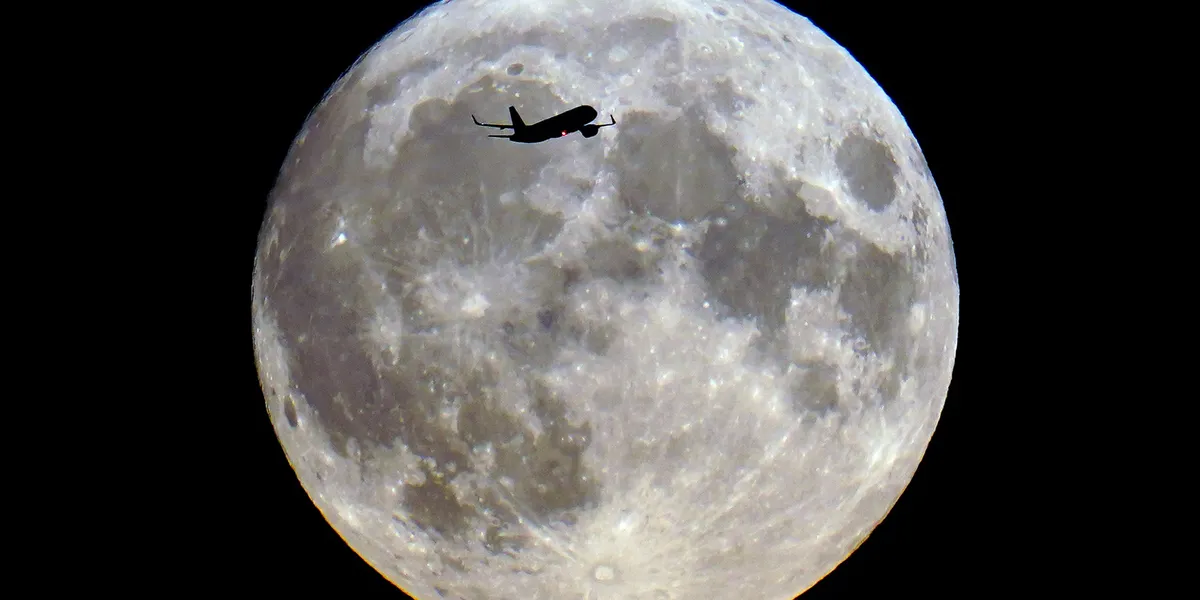
One of the key challenges in answering the question of can a telescope see the flag on the moon is the flag’s relatively small size. The flag itself is just a few feet wide and tall. Considering the vast expanse of the Moon’s surface, this small object becomes incredibly difficult to spot with any telescope, no matter how advanced. While telescopes can clearly show larger lunar features, such as craters, mountains, and even the lunar landers, spotting something as small as the flag is far more complicated.
To put this into perspective, the Moon is about 238,855 miles away from Earth, and even the most powerful telescopes struggle to resolve small objects at that distance. Larger features like the Apollo lunar modules, which are significantly bigger than the flag, are the smallest objects that can be detected through Earth-based telescopes. This makes the idea of spotting a small flag with such technology quite unlikely.
The Limitations of Earth-Based Telescopes
As someone who has spent time observing celestial objects with telescopes, I know that atmospheric interference can significantly affect the quality of observations. The Earth’s atmosphere causes a phenomenon known as atmospheric distortion, where the air refracts light and blurs images. This is one of the primary reasons why Earth-based telescopes have limitations when trying to resolve distant objects like the Moon.
Even with the most powerful ground-based telescopes, such as the Keck Observatory in Hawaii, the atmospheric interference makes it difficult to clearly see fine details on the Moon’s surface. Although we can observe large features like craters and mountains, the atmospheric distortion means that a small object like the flag remains out of reach. Even advanced telescopes with adaptive optics, designed to reduce atmospheric distortion, still struggle to resolve something as small as the flag.
Space-Based Telescopes: A New Perspective
With the limitations of ground-based telescopes, I turned to space-based telescopes for the next logical step. Space telescopes, such as the Hubble Space Telescope, don’t have to contend with Earth’s atmosphere and can produce much clearer and sharper images. However, despite their impressive capabilities, even Hubble’s resolution falls short when it comes to observing small objects on the Moon.
Hubble is renowned for its ability to observe distant galaxies, stars, and other celestial phenomena. But when it comes to the Moon, Hubble’s primary mission is not to zoom in on its surface. While Hubble has taken high-resolution images of the Moon, its primary goal is not to detect small objects such as the flags. Moreover, even with its powerful instruments, Hubble is unlikely to resolve the flag due to the limits of its resolution and the flag’s small size.
The next generation of space telescopes, like the James Webb Space Telescope (JWST), holds even greater promise in terms of resolution and sensitivity. However, JWST is primarily focused on deep-space observations and is not optimized for lunar exploration. Despite this, the advancements in telescope technology make it possible that, in the future, we may be able to capture more detailed images of the Moon’s surface.
The Lunar Reconnaissance Orbiter: A Close-Up View
While telescopes on Earth and in space struggle to resolve the flag, the most definitive answer to the question can a telescope see the flag on the moon comes from the Lunar Reconnaissance Orbiter (LRO). Launched in 2009 by NASA, the LRO is a spacecraft specifically designed to orbit the Moon and capture detailed images of its surface. Equipped with high-resolution cameras, the LRO has provided some of the most detailed photographs of the lunar surface to date.
In fact, the LRO has taken images of the Apollo landing sites and confirmed that the flags left by the astronauts are still present. While the flags appear to be faded and white due to the harsh lunar environment, they are still there. The LRO’s cameras are powerful enough to identify large objects such as the lunar modules and the paths left by the astronauts’ lunar rovers. However, the flags themselves are difficult to distinguish in the LRO images due to their small size and the angle from which the pictures are taken.
Interestingly, the flags are no longer the vibrant colors they once were. Exposure to intense solar radiation and extreme temperature fluctuations on the Moon has caused the nylon fabric to degrade over time. As a result, the once-red, white, and blue flags are now mostly white, their colors washed out by the harsh conditions of space.
Conclusion
After carefully considering the limitations of Earth-based telescopes, the capabilities of space telescopes, and the detailed images provided by the Lunar Reconnaissance Orbiter, the answer to can a telescope see the flag on the moon is clear: no, current telescopes, whether ground-based or space-based, cannot resolve the flag on the Moon. While we can observe large features such as craters and the Apollo landing sites, the flag itself remains too small and faded to be seen with most telescopes.
However, the flag’s presence on the Moon is a testament to human achievement and will continue to be remembered through the incredible images captured by the LRO. The flags, while no longer as vibrant as they once were, serve as a symbol of humanity’s journey to the Moon. Though we may not be able to see them clearly through telescopes, the legacy of the Apollo missions lives on.