Telescope Aperture Explained: The One Specification That Decides What You Can Actually See
Telescope aperture is the diameter of the primary light-gathering lens or mirror, and it is one of the most important specifications for determining what a telescope can reveal. A larger aperture gathers more light, can resolve finer detail, reaches fainter stars and deep-sky objects, and generally supports more useful magnification when the optics and atmospheric conditions are good.
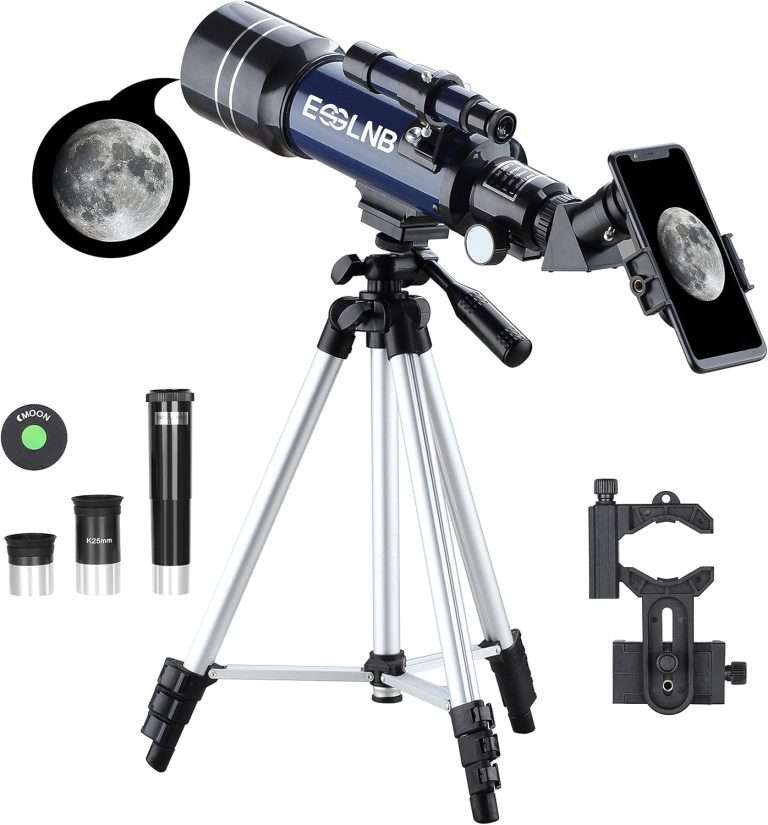
If you are comparing a 70mm refractor, 130mm Newtonian, 6-inch Dobsonian, and 8-inch reflector, aperture tells you far more about their visual potential than the huge magnification numbers sometimes printed on telescope packaging.
This does not mean the largest telescope is automatically the best telescope. Portability, optical quality, focal length, focal ratio, mount stability, light pollution, atmospheric seeing, cooldown time, storage, and your preferred observing targets all matter.
Still, if I could teach a beginner to understand only one telescope specification before buying, aperture would be near the top of the list.
What Is Telescope Aperture?
Telescope aperture is the diameter of the objective lens or primary mirror that collects incoming light.
In a refractor telescope, aperture is the diameter of the front objective lens.
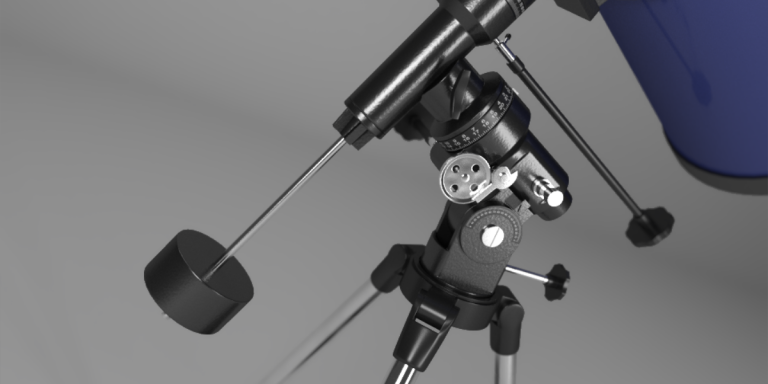
In a Newtonian reflector or Dobsonian telescope, aperture is the diameter of the primary mirror.
For Schmidt-Cassegrain and Maksutov-Cassegrain telescopes, aperture refers to the diameter of the main light-gathering optical system.
Aperture is normally stated in millimeters or inches.
Common telescope apertures include:
- 60mm
- 70mm
- 80mm
- 90mm
- 100mm
- 102mm
- 114mm
- 130mm
- 150mm
- 6 inches
- 8 inches
- 10 inches
- 12 inches
A 200mm telescope is approximately an 8-inch telescope.
Why Telescope Aperture Matters
Aperture influences two fundamental capabilities:
- Light gathering
- Resolution
These affect almost everything you see through the eyepiece.
A larger telescope can collect more photons from faint celestial objects.
It can also separate smaller details that a smaller aperture cannot resolve.
That is why increasing aperture can improve views of:
- lunar craters
- Jupiter’s cloud bands
- Saturn’s rings
- Mars surface markings
- double stars
- globular clusters
- nebulae
- galaxies
- faint stars
- planetary nebulae
Aperture does not guarantee a perfect image. Poor optics, bad collimation, unstable mounts, excessive magnification, light pollution, and atmospheric turbulence can still limit performance.
Telescope Aperture vs Magnification
Aperture and magnification are related, but they are not the same thing.
Magnification determines how large an object appears.
Aperture determines how much light and fine detail the telescope can potentially capture.
You calculate telescope magnification using:
Telescope focal length ÷ Eyepiece focal length = Magnification
For example, a telescope with a 1,000mm focal length and a 10mm eyepiece produces:
1,000 ÷ 10 = 100×
You could theoretically put an eyepiece combination producing 300× into both a 70mm telescope and a 200mm telescope.
That does not mean the views will contain the same amount of useful detail.
The larger aperture has greater resolving ability and gathers substantially more light.
The smaller instrument may simply produce a larger, dimmer, softer version of what it was already showing.
This is why telescope aperture is more fundamental than a marketing claim such as “675× power.”
How Much More Light Does a Larger Aperture Gather?
Light-gathering power depends on the area of the aperture, not simply its diameter.
The area of a circular opening increases with the square of its radius.
That means doubling telescope aperture produces roughly four times the light-gathering area before accounting for optical losses and central obstruction.
A 200mm telescope does not merely collect twice as much light as a 100mm telescope.
Its collecting area is approximately four times greater.
This difference becomes extremely important for faint deep-sky objects.
More aperture can reveal stars, galaxies, nebulae, and cluster members that remain difficult or invisible through smaller instruments.
Telescope Aperture and Resolution
Resolution describes the telescope’s ability to separate fine detail.
Larger apertures have smaller diffraction limits, which means they can theoretically resolve finer angular detail.
This matters when observing:
- close double stars
- lunar craterlets
- Jupiter’s atmospheric structure
- Saturn’s ring detail
- small planetary nebulae
- Mars during favorable apparitions
Aperture is therefore not only about brightness.
It also affects sharp detail.
Atmospheric Seeing Can Limit Large Aperture
There is an important catch.
The atmosphere often limits what a telescope can resolve.
Astronomical seeing describes the steadiness of Earth’s atmosphere.
On nights with poor seeing, turbulent air can make planets shimmer, blur, or continuously change shape.
A large telescope may possess excellent theoretical resolution, but the atmosphere can prevent you from using all of it.
This is one reason experienced planetary observers pay close attention to seeing forecasts, telescope cooldown, collimation, target altitude, and local heat sources.
Telescope Aperture Size Comparison
Here is a practical visual observing comparison.
| Aperture | Typical Strengths | Best Fit |
|---|---|---|
| 60mm to 70mm | Moon, bright planets, double stars | Highly portable beginner use |
| 80mm to 100mm | Moon, planets, bright clusters and nebulae | Portable general observing |
| 114mm to 130mm | Better planetary detail, clusters, brighter deep sky | Strong beginner option |
| 150mm or 6-inch | Serious lunar, planetary and deep-sky observing | Beginner to intermediate |
| 200mm or 8-inch | Strong all-around performance, many deep-sky objects | Popular enthusiast size |
| 250mm or 10-inch | Fainter galaxies, clusters and nebulae | Dedicated visual observer |
| 300mm or 12-inch+ | Significant deep-sky reach | Experienced observer with storage space |
These categories are not rigid.
A skilled observer under dark skies can see remarkable objects with a small refractor. A large telescope under bright urban skies may struggle with low-surface-brightness galaxies.
Aperture works together with sky quality.
What Can You See With a 70mm Telescope?
A 70mm telescope can be surprisingly capable.
Potential targets include:
- Moon craters
- lunar mountain ranges
- Venus phases
- Jupiter’s Galilean moons
- Jupiter’s major equatorial belts under good conditions
- Saturn’s rings
- bright double stars
- Pleiades
- Orion Nebula
- bright open clusters
A 70mm refractor is also light, portable, and fast to set up.
For someone who values convenience, that may matter more than owning a telescope with three times the weight.
What Can You See With a 100mm Telescope?
A 100mm telescope gives a noticeable step up in light gathering and resolution.
Depending on the telescope design and sky conditions, you can explore:
- fine lunar terrain
- Jupiter’s major belts
- Galilean moon events
- Saturn’s rings
- Mars during favorable observing periods
- double stars
- brighter globular clusters
- Orion Nebula
- Andromeda Galaxy
- many Messier objects
A 100mm refractor can be an excellent visual telescope, although larger high-quality refractors can become expensive.
What Can You See With a 130mm Telescope?
A 130mm Newtonian is a popular beginner telescope size because it provides meaningful aperture without becoming excessively large.
Under good conditions, a 130mm reflector can provide enjoyable views of:
- Jupiter
- Saturn
- Mars
- the Moon
- globular clusters
- planetary nebulae
- open clusters
- brighter galaxies
- emission nebulae
- double stars
Dark skies make an enormous difference.
Why 6-Inch Telescopes Are So Popular
A 150mm or 6-inch telescope begins to provide a more substantial deep-sky experience while remaining manageable for many observers.
Six-inch Dobsonians are especially popular because their simple mounts allow much of the purchase price to go toward aperture rather than complex electronics.
A 6-inch telescope can be excellent for:
- lunar observing
- planetary observing
- globular clusters
- planetary nebulae
- bright galaxies
- double stars
- many Messier objects
Why 8-Inch Dobsonians Are Often Called a Sweet Spot
An 8-inch or approximately 200mm Dobsonian combines substantial aperture with a package that many people can still transport and store.
It gathers far more light than typical small beginner refractors.
An 8-inch telescope under a dark sky can reveal an impressive range of deep-sky objects while also providing excellent planetary views when atmospheric seeing is steady.
This is why an 8-inch Dobsonian frequently appears in recommendations for observers who want one visual telescope capable of doing many things well.
The tradeoff is size.
A telescope that stays in the closet because it is inconvenient is less useful than a smaller telescope you carry outside every clear night.
What Telescope Aperture Do You Need for the Moon?
You do not need a huge telescope to enjoy the Moon.
A 60mm to 80mm telescope already reveals major craters, maria, mountain ranges, and dramatic shadows along the terminator.
Increasing aperture reveals smaller features and allows greater useful magnification when seeing conditions cooperate.
Aperture in the 100mm to 200mm range can produce spectacular lunar views.
Larger instruments can show finer structure, but the Moon is bright enough that light gathering is not the primary challenge.
Resolution becomes more important.
What Aperture Do You Need for Jupiter?
Jupiter is bright, so again the main benefits of increasing aperture are resolution and usable magnification.
A small telescope can show the planet’s disk, four bright Galilean moons, and major cloud belts.
Around 100mm to 130mm aperture can reveal more atmospheric detail under good seeing.
A 150mm to 200mm telescope can show significantly more subtle structure when properly cooled, collimated, and used at appropriate magnification.
Planetary detail does not depend on aperture alone.
The quality of the atmosphere is crucial.
What Aperture Do You Need for Saturn?
Saturn’s rings are visible through surprisingly modest telescopes.
A 70mm telescope can show the ring system when conditions are suitable.
Larger aperture improves resolution and can reveal additional features, such as ring structure, atmospheric banding, and more Saturnian moons.
A 150mm or 200mm telescope can provide highly satisfying Saturn views under steady skies.
What Aperture Do You Need for Mars?
Mars is more demanding than Jupiter or Saturn because its apparent disk can be quite small.
Aperture helps, but timing matters tremendously.
A larger telescope used when Mars is favorably positioned can reveal polar caps and surface markings that are challenging in smaller apertures.
A 130mm to 200mm telescope is a practical range for observers interested in meaningful planetary detail, although excellent results depend on seeing, magnification, collimation, and Mars’ distance from Earth.
What Telescope Aperture Do You Need for Galaxies?
This is where aperture becomes especially valuable.
Galaxies are generally faint extended objects.
Under dark skies, increasing aperture can reveal:
- brighter galactic cores
- larger halos
- dust lanes in favorable galaxies
- companion galaxies
- members of galaxy groups
- fainter galaxies unavailable to smaller instruments
However, aperture cannot completely defeat severe light pollution.
A 10-inch telescope from a city can still lose low-contrast galaxy detail that is visible through a smaller instrument under dark rural skies.
Dark-sky travel can sometimes improve deep-sky observing more than another small aperture upgrade.
What Aperture Do You Need for Nebulae?
The answer depends on the nebula.
Bright objects such as the Orion Nebula are visible in small telescopes.
Larger aperture can reveal greater extension, internal structure, additional stars, and fainter nebulae.
Nebula filters such as narrowband filters can improve contrast on certain emission nebulae, but filters do not replace aperture or dark skies.
This is an excellent place to recommend telescope filters, quality eyepieces, and dark-sky observing services naturally.
Aperture vs Focal Length
Aperture and focal length describe different properties.
Aperture is the diameter of the primary lens or mirror.
Focal length is the distance associated with how strongly the optical system converges light and is a major factor in calculating magnification and image scale.
Two telescopes can have the same aperture but different focal lengths.
For example:
- Telescope A: 200mm aperture, 1,000mm focal length
- Telescope B: 200mm aperture, 1,200mm focal length
Both collect a similar amount of light because their apertures are the same, but they will produce different magnification with the same eyepiece.
Aperture vs Focal Ratio
Telescope focal ratio is calculated using:
Focal length ÷ aperture = focal ratio
A 1,000mm focal-length telescope with 200mm aperture is:
1,000 ÷ 200 = f/5
A 1,200mm focal-length telescope with 150mm aperture is:
1,200 ÷ 150 = f/8
Focal ratio influences optical design, field characteristics, eyepiece performance, and astrophotography behavior.
It should not be confused with aperture.
Is Bigger Telescope Aperture Always Better?
Optically, more aperture has major advantages.
Practically, the answer is more complicated.
Increasing aperture usually increases:
- weight
- tube size
- mount requirements
- cooling time
- storage needs
- transportation difficulty
- cost
A 12-inch Dobsonian may outperform a 4-inch telescope on many targets, but that advantage does not matter if carrying the instrument down three flights of stairs discourages you from observing.
This is sometimes called the “best telescope is the one you use” principle.
It sounds simple because it is true.
How Much Aperture Should a Beginner Buy?
For many beginners, a useful range is approximately 70mm to 130mm for portable refractors and reflectors, or 150mm to 200mm for someone comfortable with a larger Dobsonian.
Your decision should depend on:
- budget
- storage space
- observing location
- physical portability
- preferred targets
- interest in planets
- interest in deep-sky objects
- astrophotography plans
- transportation
- light pollution
Do not choose purely from a specification chart.
Think about your actual observing routine.
Products That Pair Naturally With Different Apertures
Aperture changes which accessories make sense.
Telescope Eyepieces
A good eyepiece can improve comfort, field of view, eye relief, and usable magnification.
Barlow Lenses
A quality Barlow can expand your available magnification choices without requiring a large eyepiece collection.
Nebula Filters
Narrowband and line filters can improve contrast on certain emission nebulae.
Moon Filters
Some observers prefer reducing lunar brightness, particularly with larger apertures.
Collimation Tools
Newtonian reflector owners can use a Cheshire, collimation cap, or laser collimator to maintain optical alignment.
Cooling Fans
Large Newtonian telescopes may benefit from primary-mirror cooling fans.
Telescope Covers and Cases
Larger telescopes require thoughtful storage and protection.
Observing Chairs
Comfort becomes increasingly valuable when a telescope is tall, low, or changes eyepiece height significantly as you move around the sky.
These are logical affiliate opportunities because they solve problems created by actual telescope use.
Services That Complement a Telescope Purchase
A reader considering a larger aperture telescope may also benefit from:
- astronomy club memberships
- dark-sky campsite reservations
- guided stargazing trips
- observatory events
- beginner astronomy courses
- telescope setup instruction
- astrophotography workshops
- telescope rental services
Someone deciding between a portable 80mm refractor and a 10-inch Dobsonian may learn more from one public observing night than from reading another dozen specification sheets.
The Telescope Aperture Rule Worth Remembering
Aperture tells you how much light your telescope can collect and how finely it can theoretically resolve detail.
More aperture generally means more observing potential.
But the best aperture is not automatically the biggest telescope you can afford.
It is the largest aperture you can comfortably store, transport, set up, cool, collimate when necessary, and use often under the skies available to you.
A 200mm telescope sitting unused has zero effective aperture.
A 100mm telescope under the stars three nights a week is doing astronomy.
Once you understand telescope aperture, specifications such as focal length, focal ratio, magnification, eyepiece focal length, exit pupil, field of view, limiting magnitude, and resolving power become much easier to evaluate in context.
That is when telescope shopping stops being a competition over numbers and starts becoming a decision about what you actually want to see.