Why Mars Lost Its Atmosphere – The Mystery Behind the Red Planet’s Transformation
A Planet That Forgot How to Breathe
Every clear night, Mars glows like a silent ember in the dark. Yet that faint light hides a heartbreaking truth, Mars once had air, rivers, and maybe rain, but today it’s a barren world where even the wind sounds empty.
So why did Mars lose its atmosphere?
The short answer: its heart went cold.
Billions of years ago the planet’s molten core slowed, its magnetic field faded, and the Sun’s charged particles stripped away the air. The long answer is far richer, a detective story told in dust, rock, and ancient magnetism.
Let’s retrace the evidence.
Early Mars — A World of Water and Weather
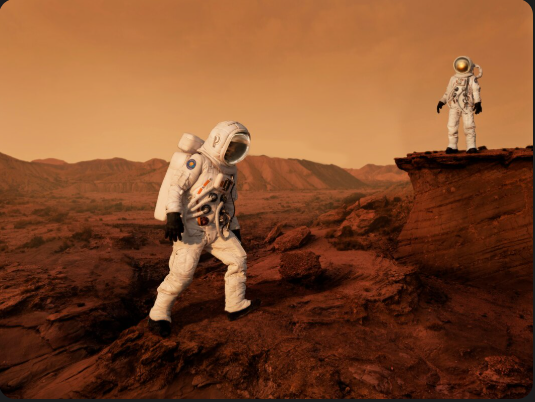
Every rover that rolls across the planet adds another clue. Dried-up riverbeds, layered cliffs, and clay minerals all point to an ancient Mars with thick air and flowing water.
About 4 billion years ago, Mars was likely warm enough for rain. Volcanoes such as Olympus Mons vented carbon dioxide and steam, creating a greenhouse effect. The pressure at the surface may have been as high as Earth’s today.
NASA’s Curiosity rover found rounded pebbles in Gale Crater, proof of long-gone streams. Isotopic ratios of hydrogen and oxygen in Martian rocks show that most of the planet’s water escaped into space over time.
Mars began almost like Earth, but size and distance set it on a colder path.
Gravity and Size — The First Weakness
Mars is only about one-tenth of Earth’s mass and has 38 percent of our gravity. That lower pull makes it easier for gas molecules to reach escape velocity. Even in the planet’s youth, light gases such as hydrogen and helium were leaking away.
A small planet also cools faster. With less heat inside, Mars’ internal engine began to shut down long before Earth’s. The fading heat weakened volcanic outgassing, the very process that replenishes an atmosphere.
Think of Mars as a campfire that burned bright but ran out of wood too soon.
The Magnetic Shield That Vanished
Here lies the pivotal chapter in the story.
When a planet’s molten core churns, it acts like a dynamo, generating a magnetic field. Earth’s magnetic field deflects the solar wind, a stream of charged particles from the Sun that can strip a planet’s air molecule by molecule.
Mars once had that protection. Ancient rocks show magnetic signatures frozen into them, evidence of a global field roughly 4.2 billion years ago. But as the core cooled, the dynamo died.
Without a shield, the solar wind slammed directly into the upper atmosphere, ionizing and sweeping it into space. Over hundreds of millions of years, Mars literally lost its breath.
What NASA’s MAVEN Mission Discovered

To confirm the theory, NASA launched the MAVEN (Mars Atmosphere and Volatile Evolution) spacecraft in 2013. Since entering orbit, it has measured how fast gases escape into space.
MAVEN found that during solar storms, the rate of atmospheric loss can spike by a factor of 10. Today, roughly 100 grams of gas per second still drift away into space, a whisper compared with the ancient torrent, but a steady one.
“Mars’ atmosphere was stripped away by the solar wind,” says Bruce Jakosky, MAVEN’s principal investigator at the University of Colorado Boulder. “We’re watching it happen in real time.” (NASA MAVEN Mission 2023)
MAVEN also detected an ion plume trailing behind the planet, a comet-like tail of escaping particles, the final sigh of a dying atmosphere.
From Warm Blue to Cold Red — A Timeline of Loss
| Epoch | Approx. Years Ago | Key Event | Impact on Atmosphere |
|---|---|---|---|
| Noachian Era | 4.5–3.7 billion | Intense volcanism, thick CO₂, liquid water | Dense air, possible rainfall |
| Hesperian Era | 3.7–3.0 billion | Core cooling, magnetic field weakens | Solar wind starts stripping gases |
| Amazonian Era | 3.0 billion – present | Atmosphere thins, dust storms dominate | Cold, dry desert; water frozen underground |
The Role of Solar Wind and Radiation
The solar wind moves at nearly 400 kilometers per second, carrying enough energy to erode an unprotected atmosphere atom by atom.
MAVEN’s detectors found that ions from Mars’ upper atmosphere are swept away in two main processes:
Ion pickup: charged oxygen and carbon atoms spiral along magnetic field lines into space.
Sputtering: fast-moving particles knock other atoms free, creating a chain reaction.
Together these turned Mars from a warm, blue world into the cold desert we see today.
Why Earth Survived
To understand why Mars lost its atmosphere, we must also see why Earth didn’t.
| Factor | Earth | Mars |
|---|---|---|
| Core Activity | Active molten iron core | Mostly solid, weak convection |
| Magnetic Field | Strong global magnetosphere | Weak local crustal patches only |
| Gravity | High (retains gases) | Low (gases escape easily) |
| Tectonics | Recycles CO₂ via volcanoes | Geologically quiet |
| Solar Distance | Ideal for liquid water | Too far, colder orbit |
Earth’s balance keeps carbon dioxide cycling through oceans and rocks, maintaining a stable climate. Mars, without tectonics or magnetism, couldn’t renew itself. Once its air was gone, nothing replaced it.
The Disappearing Water
Air and water are twins — lose one, and the other follows.
As pressure dropped, liquid water began to boil away even at near-freezing temperatures. Ultraviolet sunlight split the remaining water molecules, and hydrogen escaped into space.
Data from NASA’s ExoMars Trace Gas Orbiter show a dramatic hydrogen-to-deuterium ratio, meaning most of the lighter hydrogen is gone. That ratio serves as a fingerprint of lost oceans.
So when we see the polar ice caps glimmering today, we’re looking at the last relics of a vanished sea.
Clues from Craters and Rocks

Rocks are memory keepers. Martian meteorites found on Earth contain trapped gases matching those in Mars’ present atmosphere. By comparing isotopes of argon and nitrogen, scientists concluded that at least 80–90 percent of Mars’ original atmosphere is gone.
Certain regions still preserve crustal magnetism, frozen when the global field died. These magnetic “fossils” form stripy patterns visible from orbit, silent testimony to a once-living core.
Every mission adds new context , Perseverance’s rock samples, MAVEN’s plasma data, and even the tiny Ingenuity helicopter’s flight tests in ultra-thin air.
Did Volcanoes Try to Save It?
For a time, volcanic outgassing may have fought back.
Olympus Mons and other volcanoes released massive amounts of CO₂ and sulfur. Short-term greenhouse warming could have thawed parts of the planet again about 2 billion years ago.
But without tectonic recycling, the gases couldn’t sustain balance. The atmosphere continued to thin, and the cycle ended.
Volcanoes became monuments, giants of a world that once breathed fire and then fell silent.
Could Mars Have Supported Life?
If early Mars had lakes and rivers, microbial life could have emerged. Sediments in Jezero Crater and Gale Crater contain clays and sulfates that form only in water.
The problem wasn’t origin but endurance. When the air and magnetic field vanished, radiation increased and surface water froze. Any life would have retreated underground, or died.
Still, subsurface ice may hide pockets where microbes once lived or still survive, shielded from radiation. NASA’s Perseverance rover and ESA’s ExoMars rover will keep digging for those answers.
Can We Give Mars Its Air Back?
The idea of terraforming Mars, warming it and thickening its air, belongs partly to science fiction, yet scientists do ask whether it’s technically possible.
To restore even one percent of Earth’s atmospheric pressure, we’d need to release billions of tons of CO₂ from rocks and ice. Studies using data from MAVEN and Mars Reconnaissance Orbiter suggest there isn’t enough CO₂ left to do it naturally.
“Mars simply doesn’t have the resources for large-scale terraforming,” says Bruce Jakosky (NASA 2022). “But small, enclosed habitats are realistic.”
In other words, we can live on Mars, but not as Mars once lived, at least not soon.
Lessons for Earth
Mars serves as a cautionary tale.
It shows how losing a magnetic field can doom a planet’s climate. Earth’s field weakens slightly every few hundred thousand years, and though reversal events are normal, they remind us how fragile our system is.
Understanding Mars’ atmospheric loss helps us protect our own, from climate change, radiation, and the long-term cooling of Earth’s core. Studying another planet’s failure sharpens our awareness of balance here at home.
A World Still Changing
Even now, Mars’ story isn’t finished. Seasonal dust storms lift fine particles high into the sky, altering temperature and reflecting sunlight. The thin air still breathes, it expands and contracts daily with heat and cold.
MAVEN and future missions will keep watching, measuring how solar cycles affect that fragile balance. Each data point is a heartbeat of a planet that refuses to die completely.
Final Thought — The Planet That Whispers to Us
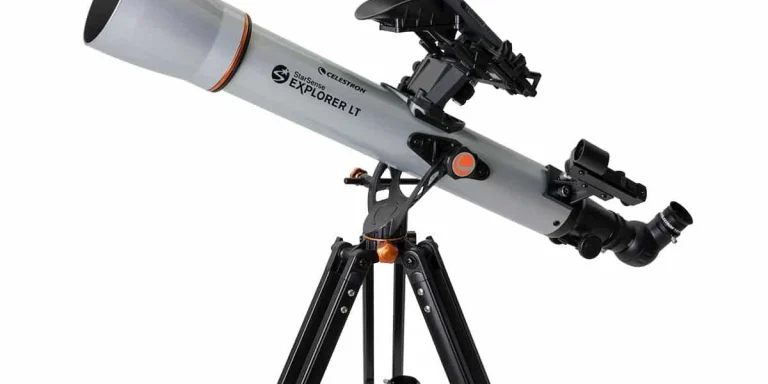
When you peer through your telescope and see that rust-colored dot, you’re not just looking at a planet. You’re watching the ghost of an atmosphere.
Mars reminds us that worlds are living systems, not static rocks. They grow, age, and, sometimes, forget how to breathe.
The same forces that stripped Mars could, in theory, challenge any planet, even ours. But they also teach resilience. Every gust of Martian dust, every echo of a dried riverbed, whispers the same message : protect what keeps you alive.
So next time you see Mars glowing in the night sky, think of it not as a failure but as a teacher, a scarlet notebook of cosmic lessons, written in the language of lost air and endless wonder.