


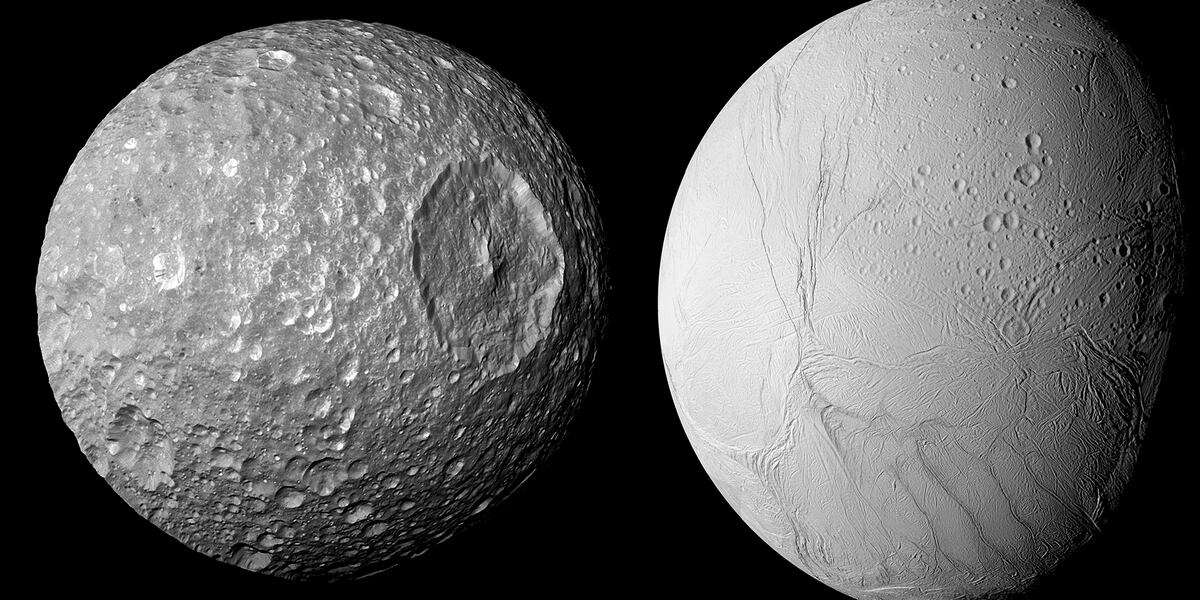
When I first started diving into the fascinating world of astronomy, one of the most intriguing aspects for me was the discovery of dwarf planets. These small celestial bodies defy the traditional classifications we’re familiar with when it comes to planets, and their study reveals a lot about the structure of our solar system. One of the most common questions people ask is about the list of dwarf planet names, a topic that sheds light on some of the most distant and mysterious objects in space. In this article, I’ll explore what makes these objects so interesting and discuss some of the most well-known dwarf planets in our solar system.
What Defines a Dwarf Planet?

To fully understand the list of dwarf planet names, it’s important to first comprehend the criteria that define a dwarf planet. According to the International Astronomical Union (IAU), a celestial body must meet three key requirements to be classified as a dwarf planet:
- It must orbit the Sun.
- It must have enough mass for gravity to shape it into a nearly round form.
- It must not have cleared its orbital path of other debris, unlike a full-fledged planet.
The most significant difference between planets and dwarf planets is the third criterion, which means that dwarf planets are unable to “clear” their orbits of smaller objects. This characteristic leads to the categorization of these bodies as smaller planets, or planetoids, despite their many similarities to the larger planets.
Pluto: The Most Famous Dwarf Planet
Most people’s first thought when they hear the phrase list of dwarf planet names is, of course, Pluto. This iconic dwarf planet was once considered the ninth planet in our solar system until it was reclassified in 2006. Despite this reclassification, Pluto remains a subject of immense fascination and is often the face of dwarf planets.
Pluto is located in the Kuiper Belt, a region of the solar system that lies beyond Neptune. This distant part of space is home to many icy objects, including other dwarf planets. Pluto’s orbital path is quite eccentric, meaning that at certain points, it actually comes closer to the Sun than Neptune. However, their orbits are carefully aligned in such a way that the two never collide.
Pluto’s surface is made up of a combination of rock and ice, with large glaciers and mountains, some reaching heights of up to 11,000 feet. Pluto also has five known moons, with Charon being the largest and most famous. Despite its reclassification, Pluto still sparks debates and discussions, with some astronomers arguing that it should be restored to its planet status.
Eris: The Distant Rival
Another notable member of the list of dwarf planet names is Eris. Discovered in 2005 by Mike Brown and his team, Eris is one of the most massive known dwarf planets in the solar system. Eris resides in the scattered disk, a region even further out than the Kuiper Belt. This makes it one of the most distant objects in the solar system, with an orbit that takes about 557 years to complete.
Eris is slightly smaller than Pluto but has more mass, which makes it a significant object of study. It is believed to have a surface composed mainly of a frozen layer of methane and nitrogen. The dwarf planet also has one known moon, Dysnomia, which orbits it at a great distance. Eris’ extreme distance from the Sun means that it is incredibly cold, with temperatures reaching as low as -243 degrees Celsius.
Haumea: The Elongated Dwarf Planet
Haumea, another fascinating object on the list of dwarf planet names, stands out because of its shape. Unlike the round appearance typical of most planets and dwarf planets, Haumea is an elongated object, almost like a rugby ball. This unique shape is due to Haumea’s rapid rotation, which takes just under four hours to complete a full rotation. This is one of the fastest rotational speeds of any known object in the solar system.
Haumea’s surface is made up of rock and ice, and it has two moons, Namaka and Hi’iaka. Haumea is located in the Kuiper Belt and shares many similarities with other dwarf planets in this region, but its unusual shape makes it particularly interesting to astronomers. Haumea’s rapid spin, along with its composition, raises questions about the conditions that led to its formation.
Makemake: A Cold, Distant World
Makemake is another important name in the list of dwarf planet names. This dwarf planet was discovered in 2005 and is located in the Kuiper Belt. Makemake is roughly two-thirds the size of Pluto, and like other dwarf planets, it has an icy surface, primarily composed of methane and nitrogen ice. Makemake takes about 310 years to complete an orbit around the Sun.
The dwarf planet is extremely cold, with an average temperature of around -239 degrees Celsius. Makemake also has one known moon, which was discovered in 2016. This moon is much smaller than Makemake itself and orbits it from a great distance. Makemake’s cold, distant location in the solar system makes it a challenging object to study, but its discovery has provided astronomers with valuable insights into the far reaches of our solar system.
Ceres: The Dwarf Planet in the Asteroid Belt
Ceres is unique in the list of dwarf planet names because it is located in the asteroid belt, between the orbits of Mars and Jupiter. Discovered in 1801 by Giuseppe Piazzi, Ceres was initially classified as a planet before being reclassified as an asteroid and, eventually, a dwarf planet. It is the largest object in the asteroid belt and has a diameter of about 940 kilometers.
Unlike many other dwarf planets, Ceres has a relatively mild surface temperature, and scientists have even discovered evidence of water ice beneath its surface. In 2015, NASA’s Dawn spacecraft became the first spacecraft to orbit a dwarf planet, and it captured stunning images of Ceres’ surface, including large, mysterious white spots, which were later identified as deposits of salt left behind by evaporated water.
Other Dwarf Planets
In addition to the well-known dwarf planets like Pluto, Eris, Haumea, Makemake, and Ceres, there are several other objects in the Kuiper Belt and beyond that are believed to be dwarf planets. Some of these objects, like 2007 OR10, Sedna, and Quaoar, are not as widely known but are still important in the study of our solar system’s outer regions. Their discovery continues to contribute to our understanding of the vastness and complexity of the solar system.
Conclusion: The Fascinating World of Dwarf Planets
The list of dwarf planet names showcases a variety of fascinating objects, each with its own unique characteristics. While Pluto is still the most famous dwarf planet, Eris, Haumea, Makemake, and Ceres each contribute to the larger picture of our solar system’s distant reaches. As technology improves and more missions are launched to study these distant worlds, it’s likely that our knowledge of dwarf planets will continue to expand, revealing even more about the mysteries of the cosmos.
By exploring the characteristics and orbits of these objects, astronomers gain valuable insights into the early solar system and the processes that shaped our current planetary system. As our exploration of the outer solar system continues, I look forward to seeing what discoveries lie ahead, particularly in the study of dwarf planets and their role in the solar system’s evolution.


