Dobsonian vs Newtonian Telescopes
As an astronomy enthusiast, I’ve had the opportunity to explore and use many types of telescopes over the years. One of the most common discussions among amateur astronomers revolves around Dobsonian and Newtonian telescopes. If you’re new to the world of astronomy or are looking to upgrade your gear, understanding the differences between Dobsonian vs Newtonian telescopes can help you make a more informed decision. In this article, I’ll walk you through the key distinctions based on my own experiences using both types, offering insight into their functionality, ease of use, and performance in various conditions.
Visit the Newtobian Telescope page to learn more about its outstanding features.
What Is a Newtonian Telescope?

Newtonian telescopes have long been a staple in amateur astronomy, and for a good reason. Developed by Sir Isaac Newton in the 17th century, this type of reflector telescope uses a parabolic primary mirror to collect light. The light is then reflected to a secondary mirror, which directs the light to an eyepiece positioned on the side of the telescope.
One of the standout features of the Newtonian design is its ability to gather large amounts of light due to the size of the primary mirror. This makes it excellent for viewing distant objects in the night sky, such as nebulae, galaxies, and star clusters. In my personal experience, the larger the aperture, the clearer and brighter the images, especially when observing deep-sky objects. The simplicity of the optical system, with just two mirrors, keeps the overall cost of the telescope relatively low compared to other optical designs.
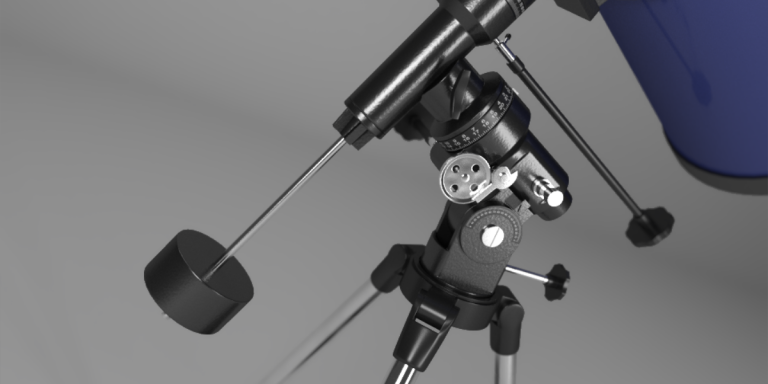
However, Newtonian telescopes are often bulky and large, particularly when you opt for bigger apertures. This means they can be difficult to move, and the setup process can be cumbersome. Additionally, the equatorial mounts used with these telescopes require some learning and fine-tuning. Aligning the mount with the Earth’s rotation can take some time, which can be a challenge for beginners.
What Is a Dobsonian Telescope?

A Dobsonian telescope is a specific kind of Newtonian reflector that is distinguished by its simplified mounting system. While both telescopes share the same basic optical components, Dobsonians are unique due to their use of a basic altitude-azimuth (up and down, left and right) mount. This mounting system is far easier to use than the equatorial mounts often associated with traditional Newtonian telescopes.
In my own stargazing sessions, I’ve found that the ease of movement with a Dobsonian is a significant advantage. The mount allows you to quickly and intuitively point the telescope at any object in the sky. Unlike the more complicated tracking system in equatorial mounts, the Dobsonian’s straightforward design makes it much more beginner-friendly. Whether you’re observing the Moon, planets, or deep-sky objects, the movements are smooth and easy to control.
Dobsonians are also more portable than traditional Newtonian telescopes. Their compact design, without the need for an intricate equatorial mount, makes them a popular choice for those who like to take their telescopes on the go. I’ve often found it easy to take my Dobsonian setup to various stargazing spots, whether in the backyard or out at a dark-sky location.
Comparing Dobsonian vs Newtonian Telescopes
While both Dobsonian and Newtonian telescopes have their merits, there are a few key factors to consider when choosing between them. From personal experience, I’ve noticed several differences that could influence which telescope works best for you. Let’s break down the major points that set these two types apart.
1. Mounting System
One of the most significant distinctions between Dobsonian vs Newtonian telescopes is the mounting system. As I mentioned earlier, Newtonian telescopes usually come with equatorial mounts. These mounts are designed to follow the rotation of the Earth, which allows for precise tracking of celestial objects. While this is beneficial for those who want to observe for extended periods of time, equatorial mounts can be tricky for beginners. Aligning the mount with the celestial poles can require patience and practice, and this process can deter newcomers.
On the other hand, Dobsonian telescopes use an altitude-azimuth mount. This mount is much more straightforward and easier to operate. Instead of worrying about polar alignment or tracking, you simply move the telescope in two directions: up and down, and left and right. This makes the Dobsonian a fantastic choice for those just starting out in astronomy or for those who prefer simplicity over precision.
2. Portability and Setup
When it comes to portability, the Dobsonian telescope generally wins out over the traditional Newtonian. The simplicity of the Dobsonian’s design, including the mount, makes it easier to transport and set up. I’ve used both types in the field, and I’ve found that setting up a Dobsonian is quick and hassle-free. You can be stargazing within minutes of arriving at your observation spot.
Newtonian telescopes, particularly those with equatorial mounts, are bulkier and require more setup time. Aligning the mount and ensuring the telescope is properly positioned for accurate tracking can be time-consuming. For those who prefer quick and easy setups, the Dobsonian may be the better choice.
3. Cost Considerations
Both Dobsonian and Newtonian telescopes offer great value for money, especially considering the size of the aperture they provide. With both types, you can get large apertures that allow for deep-sky observations without spending a fortune. However, the Dobsonian telescope is often more affordable due to its simplified design. The lack of a complex equatorial mount means that the overall cost is lower.
Newtonian telescopes, while still relatively inexpensive, can become more costly when paired with high-quality equatorial mounts. These mounts, especially motorized ones that track objects automatically, add to the price. For beginners who are just starting their astronomy journey, a Dobsonian telescope may offer the best combination of performance and affordability.
4. Ease of Use
As someone who has spent countless hours using both types of telescopes, I can confidently say that the Dobsonian is the more user-friendly option. The straightforward mount and intuitive controls make it easy to start observing right away. Whether you’re interested in observing the planets or the faintest galaxies, the Dobsonian’s ease of use will allow you to enjoy the night sky without frustration.
Newtonian telescopes require more effort to operate effectively. Aligning the telescope with an equatorial mount and keeping track of moving objects can be challenging, especially for beginners. However, for more experienced astronomers, the precision offered by an equatorial mount may be worth the extra effort.
Conclusion
After exploring both Dobsonian and Newtonian telescopes, it’s clear that each type offers distinct advantages depending on your needs. The Dobsonian’s simplicity, affordability, and ease of use make it a fantastic choice for beginners or those who want a no-fuss stargazing experience. On the other hand, the Newtonian telescope’s precision and tracking capabilities make it ideal for more serious astronomers who are willing to spend time setting up their equipment.
Ultimately, whether you choose a Dobsonian or a Newtonian telescope comes down to your personal preferences and how you intend to use your telescope. Both types offer excellent performance, but knowing your needs—whether it’s ease of use, portability, or tracking accuracy—will guide you in the right direction.