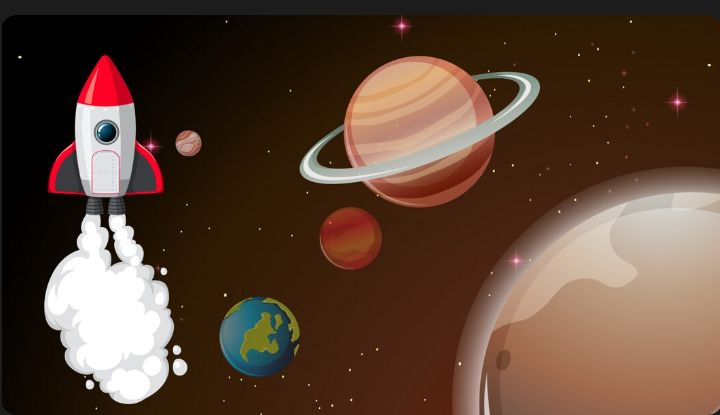
Mars vs Earth: How the Red Planet Compares to Our Home World
Every stargazer has looked at Mars and wondered the same thing: Why is Earth full of life while Mars is so silent?
The Tale of Two Worlds
At first glance, they seem like siblings. Both have days and nights, polar caps, mountains, and even seasons. But when you look closer, the differences are staggering.
So, what exactly sets Mars vs Earth apart? The short answer: Earth is alive, Mars is asleep.
Earth’s thick atmosphere, liquid oceans, and strong magnetic field keep it warm and protective. Mars, once Earth’s twin in many ways, lost its atmosphere billions of years ago. The result is a frozen desert, quiet and exposed to space.
Yet the more we study Mars, the more we realize how similar beginnings can lead to very different destinies.
Let’s dive deep into the story of these two planets, how they compare, why they differ, and what they can teach us about the fragile balance that makes life possible.
Origins: Born from the Same Dust
Both Earth and Mars were formed from the same swirling cloud of gas and dust that surrounded the newborn Sun about 4.6 billion years ago.
They share similar building blocks, rock, metal, and trace gases, but their sizes and distances from the Sun set their paths apart.
Earth formed closer to the Sun, where heavier materials condensed, giving it a dense core and stable heat source.
Mars, forming farther out, ended up smaller and cooler, with less gravitational strength to hold on to its atmosphere.
That small size became Mars’ biggest disadvantage. Its weaker gravity meant it couldn’t retain heat or air for long, a difference that would decide its fate.
Size and Structure: Small but Mighty vs Small and Cold
One of the easiest ways to understand Mars and Earth differences is to start with their physical dimensions.
| Feature | Earth | Mars |
|---|---|---|
| Diameter | 12,742 km | 6,779 km |
| Mass | 5.97 × 10²⁴ kg | 6.42 × 10²³ kg |
| Surface Area | 510 million km² | 145 million km² |
| Gravity | 9.8 m/s² | 3.7 m/s² |
| Day Length | 24 hours | 24.6 hours |
| Year Length | 365 days | 687 days |
Mars is roughly half the size of Earth and has only one-tenth its mass. Its surface area is similar to all of Earth’s land combined, which is why scientists call it a “smaller, colder cousin.”
Mars vs Earth Gravity
Mars’ weaker gravity, only 38% of Earth’s, has major implications. You could jump nearly three times higher on Mars. But that same light gravity also means:
The atmosphere escapes more easily into space.
Liquids evaporate faster.
Long-term human health would be challenged by muscle and bone loss.
Gravity shapes everything, from air pressure to weather to the ability to keep water stable. And in that race, Earth wins hands down.
Orbit and Distance from the Sun
Where a planet sits in the solar system determines how much sunlight and energy it receives.
| Feature | Earth | Mars |
|---|---|---|
| Average Distance from Sun | 149.6 million km | 227.9 million km |
| Orbital Period | 1 Earth year | 1.88 Earth years |
| Orbital Speed | 29.8 km/s | 24.1 km/s |
| Axial Tilt | 23.4° | 25.2° |
Despite its colder climate, Mars’ axial tilt is similar to Earth’s, giving it recognizable seasons. But its longer orbit means those seasons last almost twice as long, a Martian year equals 687 Earth days.
Mars Orbit vs Earth
Because Mars orbits farther from the Sun, sunlight there is only about 43% as strong as on Earth. That weak sunlight combined with its thin atmosphere keeps Mars perpetually cold.
Still, both planets share the rhythm of days and nights that makes Mars feel strangely familiar through a telescope.
Atmosphere: Thick and Life-Giving vs Thin and Lethal
The most dramatic contrast between Earth vs Mars lies in their atmospheres.
| Gas Composition | Earth (%) | Mars (%) |
|---|---|---|
| Nitrogen | 78 | 2.6 |
| Oxygen | 21 | 0.13 |
| Carbon Dioxide | 0.04 | 95 |
| Argon | 0.9 | 1.9 |
| Trace Gases | 0.06 | <1 |
Mars’ air is 95% carbon dioxide, while Earth’s is dominated by nitrogen and oxygen, the recipe for life.
Mars’ atmosphere is also 100 times thinner than Earth’s. That means:
You couldn’t breathe unprotected.
The surface pressure is too low for liquid water to remain stable.
There’s almost no protection from solar radiation or meteor impacts.
On Earth, the atmosphere acts like a blanket, trapping heat and filtering harmful rays. On Mars, it’s more like a whisper — too thin to warm or shield.
Climate: Warm Blue Marble vs Frozen Desert
Earth vs Mars Climate
Earth enjoys a comfortable balance. Thanks to its thick atmosphere and greenhouse gases, its average temperature stays around 15°C (59°F).
Mars, by contrast, averages −60°C (−80°F). Even its warmest days near the equator barely reach 20°C (68°F), while nights plunge to −100°C (−148°F).
According to NASA’s Climate Data (2024), Mars’ temperature swings can exceed 170°C between day and night — the largest in the solar system.
That wild fluctuation is because its thin air can’t trap heat.
Yet both planets experience winds, storms, and clouds. Mars even has enormous dust storms that can blanket the entire planet for months.
Surface and Geography: The Great Divide
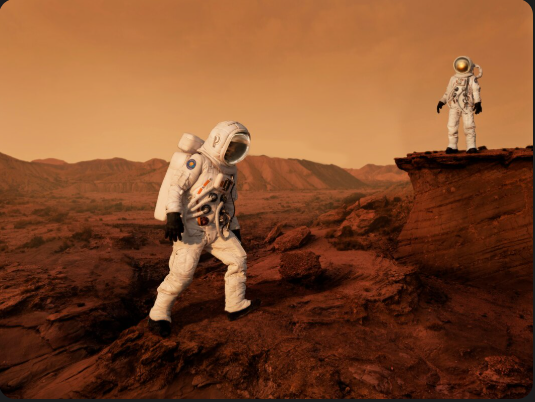
Mars Surface vs Earth
When we look at Mars, we see echoes of Earth’s landscapes, volcanoes, valleys, craters, and polar ice caps. But everything on Mars is on a different scale.
| Feature | Earth Example | Mars Equivalent |
|---|---|---|
| Highest Peak | Mount Everest (8.8 km) | Olympus Mons (21.9 km) |
| Deepest Canyon | Mariana Trench (11 km) | Valles Marineris (7 km deep, 4,000 km long) |
| Polar Regions | Arctic & Antarctic | North & South polar ice caps |
| Continents | Seven major plates | One continuous crust |
| Surface Type | 71% water, 29% land | 100% land, mostly dry basalt |
Mars is home to Olympus Mons, the tallest volcano in the solar system, and Valles Marineris, a canyon so large it could stretch from New York to Los Angeles.
Earth’s surface is constantly reshaped by plate tectonics, creating continents, earthquakes, and ocean basins. Mars, with no active tectonics, is geologically frozen in time, a fossil of ancient activity.
Water: Flowing Oceans vs Frozen Remnants
Water is the key to life, and here the Mars vs Earth difference becomes dramatic.
Earth
71% of the surface is covered by oceans.
Water exists in all three states: liquid, solid, and vapor.
Constant circulation supports life and climate stability.
Mars
No surface water today.
Ice caps at the poles and frozen subsurface water exist.
Evidence shows ancient rivers, deltas, and lake beds.
The Mars Reconnaissance Orbiter and Curiosity rover have found minerals that form only in liquid water, proof that Mars once had rivers and possibly a northern ocean.
ESA’s Mars Express radar data (2020) suggest a possible subsurface lake beneath the south pole, although this remains debated.
If Mars once had water, it might have had life, even if only microbial.
Magnetic Fields: The Shield of Life
Earth’s magnetic field is generated by its molten iron core, forming a powerful shield called the magnetosphere. It deflects harmful solar wind and cosmic rays, protecting our atmosphere.
Mars once had a magnetic field too, but it died out billions of years ago when the planet’s core cooled.
Without that protection, the solar wind stripped Mars’ atmosphere, leading to its current thin, cold state.
This single difference, a live core vs a dead one, may be why Earth supports life while Mars cannot.
Moons: Big vs Small Companions

| Planet | Number of Moons | Largest Moon | Unique Facts |
|---|---|---|---|
| Earth | 1 | The Moon | Causes tides, stabilizes rotation |
| Mars | 2 | Phobos & Deimos | Likely captured asteroids |
Earth’s Moon is huge — about 1/4 the size of Earth, and it plays a vital role in stabilizing our planet’s tilt, which keeps our climate stable.
Mars’ moons, Phobos and Deimos, are tiny and irregularly shaped, only about 22 km and 12 km across. They rise and set multiple times a day and will likely break apart or crash into Mars in a few tens of millions of years.
So while Earth’s Moon inspires poetry, Mars’ moons tell a story of chaos and capture.
Life: Bursting With It vs Searching for It
Why Mars and Earth Are Similar — Yet So Different
Both planets once had warm climates, water, and atmospheres. But where Earth held on, Mars lost almost everything.
Earth’s magnetic field, size, and distance from the Sun created a perfect balance. Mars’ smaller core and weaker gravity couldn’t hold on to heat or air.
Yet Mars remains our best hope for finding life beyond Earth.
NASA’s Perseverance rover is currently exploring Jezero Crater, where an ancient river delta might hold signs of microbial fossils. Future Mars Sample Return missions could provide the final evidence we’ve been searching for.
As NASA’s astrobiologist Jennifer Eigenbrode put it, “Mars may not be alive now, but it remembers what life needs.”
Earth vs Mars Size, Gravity, and Habitability — Data Summary
| Category | Earth | Mars | Difference |
|---|---|---|---|
| Diameter | 12,742 km | 6,779 km | Mars is half as wide |
| Mass | 5.97 × 10²⁴ kg | 6.42 × 10²³ kg | Mars is 10× lighter |
| Gravity | 9.8 m/s² | 3.7 m/s² | 38% of Earth’s |
| Atmospheric Pressure | 101 kPa | 0.6 kPa | 170× thinner |
| Average Temperature | 15°C | −60°C | Much colder |
| Magnetic Field | Strong | Weak | Mars has no global field |
| Water Presence | Abundant | Frozen/Subsurface | Mars lost its surface water |
| Surface Composition | 71% water, 29% land | 100% land | Dry desert world |
| Habitability | Yes | Possibly (past) | Earth sustains life |
Mars vs Venus: The Other Neighbors
Mars isn’t Earth’s only neighbor. To its other side lies Venus, a planet almost Earth’s twin in size, but opposite in habitability.
| Feature | Venus | Mars |
|---|---|---|
| Atmosphere | Thick CO₂, sulfuric acid | Thin CO₂ |
| Temperature | 465°C | −60°C |
| Pressure | 92× Earth’s | 0.6% of Earth’s |
| Surface | Volcanic, cloudy | Rocky, dusty |
| Life Potential | Unlikely (surface) | Possible (past/subsurface) |
Venus is too hot, Mars is too cold, and Earth is just right. This “Goldilocks Zone” position is what allows liquid water and stable climates.
In a cosmic sense, Earth sits in the sweet spot between fire and ice.
Mars vs Moon: A Different Kind of Comparison
Our Moon is smaller and airless, yet in some ways, it’s easier to reach and survive on than Mars, simply because of distance.
| Feature | Mars | Moon |
|---|---|---|
| Distance from Earth | 225 million km | 384,000 km |
| Travel Time | 6–9 months | 3 days |
| Atmosphere | Thin, CO₂ | None |
| Gravity | 38% of Earth | 16.6% of Earth |
| Water | Ice at poles | Ice in shadowed craters |
| Colonization Difficulty | High | Moderate (short-term) |
The Moon will likely serve as a training ground for Mars colonization. NASA’s Artemis missions aim to test habitats and resource extraction before heading farther out.
Mars vs Jupiter: The Giant and the Dwarf
Comparing Mars vs Jupiter is like comparing a pebble to a planet-sized hurricane. Yet it’s worth understanding because Jupiter shaped Mars’ destiny.
| Feature | Mars | Jupiter |
|---|---|---|
| Type | Rocky | Gas giant |
| Mass | 0.1 Earths | 318 Earths |
| Atmosphere | Thin CO₂ | Thick hydrogen and helium |
| Moons | 2 | 95+ |
| Magnetic Field | Weak | Extremely strong |
Jupiter’s massive gravity helped protect inner planets like Earth and Mars by capturing asteroids, but it also disrupted early planetary formation, possibly limiting Mars’ growth.
Without Jupiter’s interference, Mars might have become another Earth.
Lessons from the Comparison
When we compare Mars vs Earth, we’re really studying why life thrives here and not there.
Size matters: Mars’ small size doomed its atmosphere.
Distance matters: Too close (Venus) burns, too far (Mars) freezes.
Magnetism matters: Earth’s living core preserves its air and water.
Chance matters: Subtle shifts in formation led to two different outcomes.
In short, Mars reminds us that Earth’s habitability is fragile and rare.
If Mars once had oceans and air but lost them, what keeps Earth from the same fate? The answer: constant geological and magnetic renewal.
That’s why planetary scientists study Mars, not just to find life there, but to understand how to preserve it here.
Final Thought
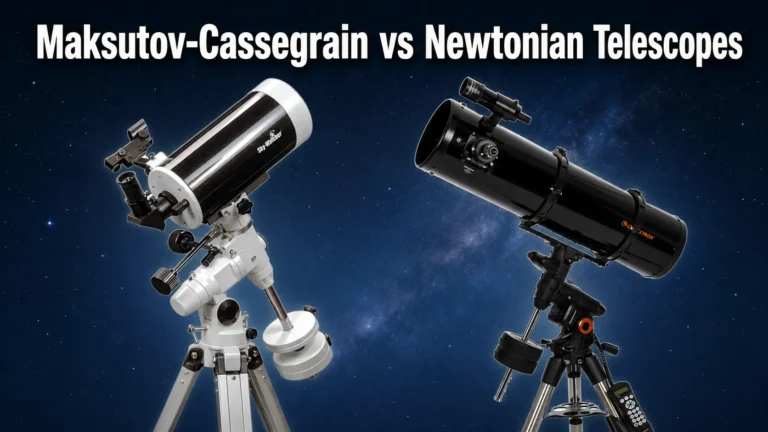
Looking at Mars vs Earth through your telescope or imagination, you see more than two worlds, you see two versions of a possible future.
One world, blue and thriving. The other, red and silent.
Mars teaches us humility. It shows that a planet can have all the right ingredients and still lose the recipe for life. But it also offers hope, that with exploration, science, and maybe one day, human presence, we can give that silent world a new heartbeat.
So the next time you spot Mars glowing like a distant ember in the night sky, take a moment. You’re not just seeing another planet. You’re looking at what could have been, and what might still be.