15 Fascinating Facts About Mars: The Red Planet Explained
If you’ve ever looked up at the night sky and noticed a small, reddish star shining brightly, chances are you’ve been staring at Mars , the Red Planet. But what makes this world so captivating? The simple answer is that Mars feels like our cosmic neighbor, close enough to study and mysterious enough to spark a thousand questions.
Mars has fascinated astronomers for centuries, from Galileo’s first telescopic observations in the 1600s to NASA’s rovers exploring its surface today. People want to know: what is Mars really like? How big is it, why is it red, and could humans ever live there? Let’s explore some fascinating facts about Mars that reveal just how incredible this small world truly is.
15 Fascinating Facts About Mars
1. Mars Is the Fourth Planet from the Sun
In our solar system lineup, Mars sits neatly between Earth and Jupiter. It’s about 142 million miles (228 million kilometers) from the Sun, almost twice as far as Earth. Because of that distance, Mars receives less sunlight, which helps explain its cold climate.
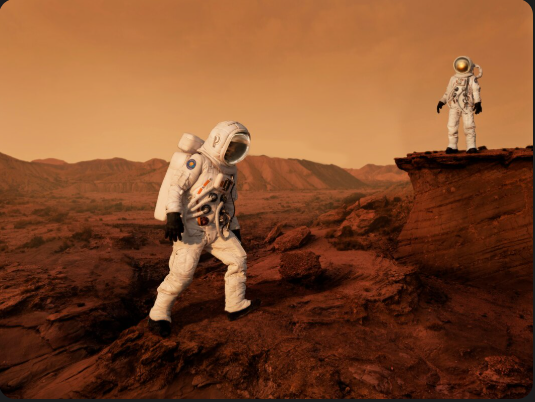
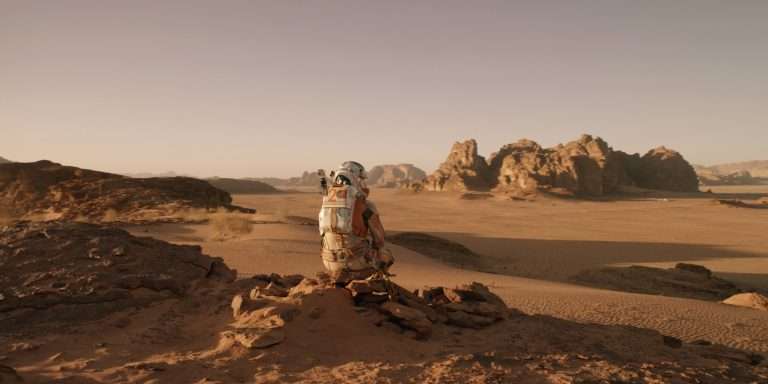
Astronomers often describe Mars as a “terrestrial planet”, meaning it has a rocky surface similar to Earth’s, not a gas giant like Jupiter or Saturn. When you see images of its surface, you’ll notice deserts, mountains, and valleys. Yet everything looks older and more silent, as if frozen in time.
People also read: Is Mars Hot or Cold?
2. The Size of Mars Might Surprise You
One of the most interesting Mars facts is how small it actually is. Mars is about half the size of Earth, with a diameter of roughly 4,220 miles (6,780 kilometers). Its total volume could fit inside Earth more than six times!
This smaller size also means it has much less gravity. If you weigh 150 pounds on Earth, you’d weigh just 57 pounds on Mars. That’s only about 38% of Earth’s gravity, enough to make walking easier and jumping much higher.
This difference in gravity will play a major role if humans ever colonize Mars because our muscles and bones would weaken in the long run under such reduced gravity.
3. Why Mars Is Called the Red Planet
Mars gets its iconic red color from iron oxide, or rust, covering its surface. When sunlight hits Mars, these iron-rich dust particles reflect a reddish glow that’s visible even from Earth.
Ancient civilizations noticed this distinctive hue and linked it to war and fire. The Romans named it after their god of war, Mars. Interestingly, in different cultures, Mars has similar meanings, the Babylonians called it Nergal, and the Greeks called it Ares.
The reddish color isn’t uniform though. Up close, you’d see varying shades, golden sand, dark volcanic rock, and dusty pink plains stretching for miles.
4. Mars Has Both Earth-like and Alien Landscapes

When you look at satellite images from NASA’s Mars Reconnaissance Orbiter, you see breathtaking views that look both familiar and strange. Mars has towering volcanoes, vast canyons, frozen poles, and dry riverbeds that suggest a once-wet past.
Here are a few fascinating landmarks on Mars:
Olympus Mons: The largest volcano in the solar system, about three times taller than Mount Everest.
Valles Marineris: A canyon system so vast it would stretch across the entire United States.
Polar Ice Caps: Both poles contain frozen carbon dioxide and water ice, hinting that Mars still hides secrets beneath its surface.
These features make Mars one of the most studied planets by scientists and space agencies around the world.
5. How Long Is a Day on Mars?
Here’s one of the most interesting Mars facts: A day on Mars, called a sol, lasts 24 hours and 37 minutes. That’s only slightly longer than an Earth day.
This similarity means adjusting human biological clocks for future missions won’t be too difficult. NASA even trains mission teams to live on “Mars time” when managing rover operations, shifting their daily schedules by 37 minutes to match the Martian rotation.
6. A Year on Mars Takes Nearly Twice as Long
While a day feels familiar, a year on Mars is a different story. Because it’s farther from the Sun, Mars completes one orbit every 687 Earth days, almost two Earth years.
That means if you lived on Mars, you’d celebrate your birthday only every two Earth years! Seasons also last much longer there, giving scientists plenty of time to observe long-term climate changes.
7. Mars Has a Thin Atmosphere
One reason Mars appears lifeless today is its extremely thin atmosphere. Unlike Earth’s thick, oxygen-rich air, the Martian atmosphere is about 95% carbon dioxide, with traces of nitrogen and argon.
The thin air can’t trap much heat, causing wild temperature swings, from 70°F (20°C) in daylight to –195°F (–125°C) at night. It’s also why liquid water can’t stay on the surface for long; it simply evaporates or freezes instantly.
NASA scientists believe Mars once had a denser atmosphere that was stripped away by solar winds when its magnetic field faded billions of years ago. Source: NASA Mars Exploration Program.
8. Mars Has Gravity — But It’s Much Weaker
Mars’ smaller size gives it a weaker gravitational pull. Its surface gravity is 38% of Earth’s, which explains why astronauts would bounce around easily there.
Weaker gravity means the atmosphere and water molecules escape more quickly into space. Over billions of years, this is one reason Mars lost its oceans and much of its protective atmosphere.
9. How Far Is Mars from Earth?
The distance between Mars and Earth isn’t constant. Because both planets orbit the Sun at different speeds, the distance changes dramatically. At its closest, Mars can be about 33.9 million miles (54.6 million km) from Earth, while at its farthest it’s around 250 million miles (400 million km) away.
Every 26 months, Mars and Earth align on the same side of the Sun, an event called opposition. During opposition, Mars appears larger and brighter in the sky, making it the perfect time for stargazing or telescope viewing.
10. Mars Has Two Tiny Moons

Mars has two small moons named Phobos and Deimos, discovered in 1877 by American astronomer Asaph Hall. They are irregularly shaped and much smaller than our Moon, more like giant asteroids than spherical moons.
Scientists believe they might actually be captured asteroids from the nearby asteroid belt. Phobos, the larger moon, is slowly spiraling toward Mars and could one day break apart, forming a thin ring system. Source: European Space Agency.
11. Mars Once Had Rivers and Lakes
Evidence gathered by NASA’s rovers and orbiters shows that Mars once had liquid water on its surface. Channels and lakebeds suggest rivers once flowed across the planet billions of years ago.
The Curiosity and Perseverance rovers found clay minerals that can form only in the presence of water. These discoveries have fueled ongoing research into whether microbial life once existed there, or might still exist underground.
12. The Martian Sky Is Not Always Red
Here’s a visual surprise, the Martian sky isn’t red at all times. During the day, the sky often appears butterscotch or orange, and at sunset, it turns blue!
This happens because fine dust in the thin atmosphere scatters sunlight differently than on Earth. On Mars, blue light travels more efficiently through the dusty air at dusk, creating a reverse effect of our red sunsets.
13. The Air on Mars Is Not Breathable
Despite how Earth-like Mars looks from afar, the air there would kill humans almost instantly. It’s made mostly of carbon dioxide with almost no oxygen. The pressure is also so low that your blood would boil without a spacesuit.
Future missions will need advanced life-support systems or technologies that convert CO₂ into oxygen, such as NASA’s MOXIE experiment on the Perseverance rover. This test successfully produced small amounts of breathable oxygen directly from the Martian air.
14. You Could See Mars With a Simple Telescope
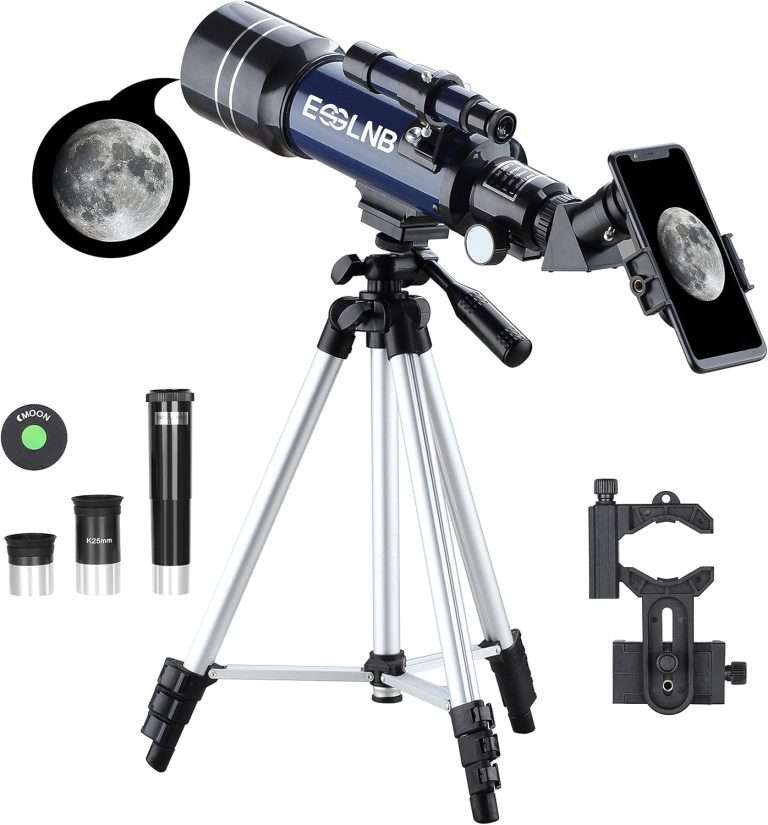
You don’t need an observatory to see Mars. Even a 70mm refractor telescope can reveal its reddish surface and sometimes polar caps during opposition.
If you use a telescope with at least 100mm aperture, you might even catch glimpses of dark surface markings or the thin white haze of clouds. For beginners, Mars is one of the easiest planets to observe, bright, distinct, and full of mystery.
15. Mars Is a Key to Understanding Earth’s Past and Future
Studying Mars gives us a glimpse into what might have happened to a once-livable planet that lost its water and atmosphere. Scientists believe Mars could help us understand climate evolution, planetary formation, and even how life began on Earth.
NASA and the European Space Agency are currently working on a Mars Sample Return Mission that will bring rock samples from the planet back to Earth for detailed study, one of the most ambitious space missions ever attempted.
Mars vs Earth Comparison Chart
| Feature | Earth | Mars |
|---|---|---|
| Distance from Sun | 93 million miles | 142 million miles |
| Day Length | 24 hours | 24 hours 37 min |
| Year Length | 365 days | 687 days |
| Gravity | 1g | 0.38g |
| Diameter | 12,742 km | 6,780 km |
| Moons | 1 | 2 |
| Atmosphere | Nitrogen/Oxygen | Carbon Dioxide |
| Average Temperature | 59°F | -80°F |
This simple chart makes for an excellent link magnet. Other websites, teachers, and science bloggers often link to data-driven visuals like this when discussing Mars and Earth comparisons.
Why Mars Continues to Captivate Us
From the first telescope glimpse centuries ago to today’s robotic explorers, Mars has always felt like the planet next door, a world that mirrors our curiosity and imagination.
What makes Mars truly fascinating isn’t just its red color or its icy deserts, but what it represents: a chance to look into our own origins, test the limits of human exploration, and dream about a second home beyond Earth.
So the next time you spot that glowing red dot in the night sky, take a moment to remember , that’s not just another planet. It’s a world that’s teaching us what it means to explore, endure, and imagine.
Final Thought
Mars reminds us that even in the vastness of space, curiosity connects us all. Whether you’re peering through a backyard telescope or following the latest NASA updates, the Red Planet offers endless wonder.
For a planet that’s millions of miles away, Mars has a strange way of feeling close, like a neighbor we can’t stop thinking about.
Sources: NASA Mars Exploration Program, European Space Agency (ESA), National Geographic Science Desk.